
Gummy Supplement Manufacturers: Capacity, Actives, and What Drives Quality
Gummies are the hardest mainstream supplement format to make well. Here's how gummy supplement manufacturers handle capacity, active ingredients, and the quality factors buyers should check.
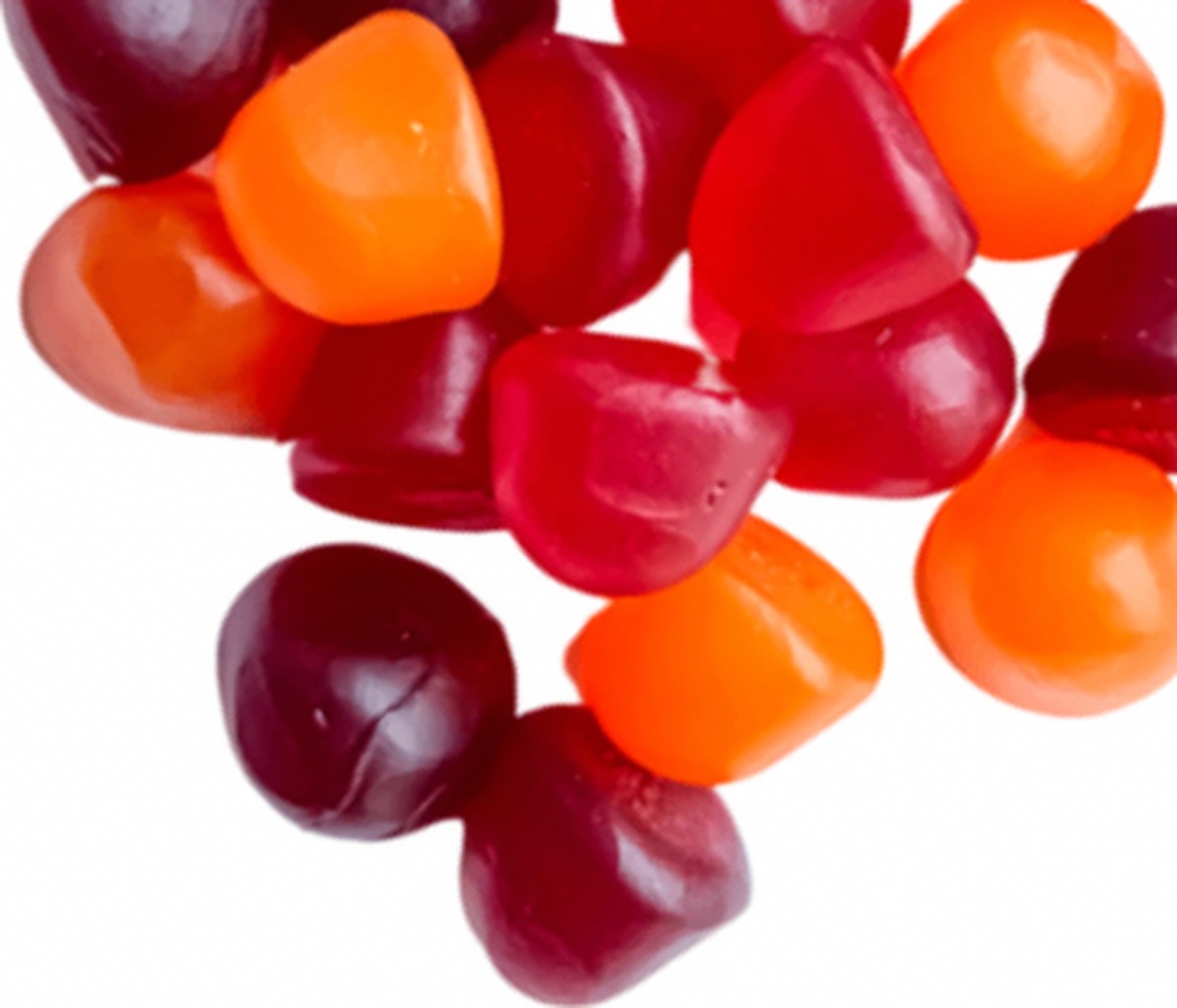
Gummies are one of the most popular supplement formats and one of the hardest to make consistently. A capsule is mostly a matter of accurate powder filling. A gummy is a cooked confection that has to carry vitamins or botanicals through heat, acid, moisture, and time. Choosing the right gummy supplement manufacturer, or the right distributor carrying their product, comes down to how well they control those variables.
This guide explains how gummies are made, where quality problems usually start, and what buyers should check before placing an order.
How gummies are made
Most supplement gummies follow the same basic steps, whatever the manufacturer's equipment looks like:
- Cooking a base of sweeteners, water, and a gelling agent (gelatin or pectin) to a target solids level
- Adding acids, colors, flavors, and the active ingredients, often at the end of the cook to limit heat exposure
- Depositing the hot mass into molds, either starch trays (mogul lines) or starchless silicone or metal molds
- Curing or drying the gummies under controlled temperature and humidity until they reach target texture and moisture
- Coating with oil or a sugar or sour sanding, then inspecting and packaging
Each step affects the next. Deposit temperature affects how evenly actives are distributed. Curing conditions affect texture and water activity. Coating affects whether gummies stick together in the bottle during a hot summer shipment.
Gelatin vs. pectin
The gelling agent defines a lot about the finished product. Gelatin gives a chewy, elastic bite but rules out vegan and many vegetarian claims. Pectin is plant-based and gives a softer, cleaner bite, but it sets fast and is sensitive to pH and solids, which makes processing less forgiving. Neither is automatically better. The choice depends on your positioning and your customers. It's a positioning decision as much as a technical one.
Sweetener choice matters just as much. Most gummies use a sugar and glucose syrup base, which is reliable and forgiving. Sugar-free gummies rely on sugar alcohols, allulose, or fibers, and each changes how the mass cooks, sets, and holds moisture. Sugar alcohols also carry labeling considerations, and some cause digestive discomfort for some people at higher intakes. If sugar content is part of your positioning, raise it at the start of the conversation, because it affects nearly every other formulation decision. Our piece on sugar-free gummies goes further.
What a gummy supplement manufacturer can and can't fit
Gummies have a real limit on how much active ingredient they can carry. A typical supplement gummy weighs a few grams, and most of that weight is the sugar or sugar-alternative base and gelling agent that make it a gummy. Push the active load too high and the gummy won't set properly, tastes bad, or has poor texture.
That's why most gummy products use two or more pieces per serving, and why some ingredients are better suited to other formats. Minerals needed in large amounts, like calcium and magnesium, are hard to deliver in a gummy at meaningful doses without a serving size of many pieces. Bitter or strongly flavored botanicals need heavy flavor masking. Oils need special handling to stay emulsified. An experienced vitamin gummy manufacturer will tell you plainly when a formula is a better fit for a capsule or softgel.
Overages and potency over time
Gummies are harder on actives than most dry formats. Heat during cooking, moisture in the finished product, and acidic pH all speed up degradation of sensitive nutrients. Some vitamins lose potency faster than others, and certain botanicals and probiotics need special care.
Manufacturers compensate with overages, adding more of an ingredient than the label claims so the product still meets claim at expiration. Good overage decisions are based on stability data, not guesswork. When you evaluate a supplement gummy manufacturer, ask how overages are set and what stability data supports the expiration date.
The label claim on a gummy has to be true on its last day of shelf life, not just the day it was made.
Quality factors buyers should check
Beyond cGMP compliance under 21 CFR 111, gummies have a few format-specific quality points worth checking.
| Quality factor | Why it matters | What to ask |
|---|---|---|
| Water activity | Controls texture, microbial risk, and stickiness | What is the target range and how is it tested? |
| Content uniformity | Actives must be evenly distributed piece to piece | How is blend and deposit uniformity verified? |
| Potency at release | Confirms overages landed where intended | Does the COA show assay results for key actives? |
| Microbiology | Sugar-based products can support microbial growth if poorly made | What micro limits are in the spec? |
| Heavy metals | Some colors, botanicals, and minerals carry risk | What limits apply, and are they tested per lot? |
| Sticking and melting | Gummies can fuse in heat during transit | What coating and packaging are used? |
Ask for a lot-specific certificate of analysis for any gummy you buy, and read it against the specification. Our guide on reading a COA covers what each section means.
Capacity and minimums
Gummy capacity is set by cooking systems, depositor speed, and, often most of all, curing room space. Curing can take many hours, so a gummies manufacturer's real throughput depends on how much product it can hold in controlled rooms at once. That's one reason gummy minimums tend to be higher than capsule minimums, and why custom gummy projects often have longer timelines than buyers expect.
Stock gummy programs sidestep much of this. Because the formula, molds, and stability data already exist, stock gummies can be bought in smaller quantities and shipped faster than a custom run.
Packaging for shelf life
Packaging protects gummies from the two things that hurt them most: moisture and heat. Bottles with induction seals and desiccants are common. Pouches need good barrier films. For warm-weather shipping, ask about cold-chain options or at least whether the supplier has experience with summer transit. Bottle count and headspace matter too, since a half-empty bottle holds more air and moisture once opened.
RV Pharma is a wholesale nutraceutical distributor offering stock gummy programs starting at 1,000 bottles, with Supplement Facts panels published on product pages, lot and expiration coding on every bottle and case, and lot-specific COAs on request. See the current range on our gummies page.
Frequently asked questions
How are supplement gummies manufactured?
Gummies are made by cooking a base of sweeteners, water, and a gelling agent, then adding acids, flavors, colors, and active ingredients. The mixture is deposited into molds, cured or dried under controlled temperature and humidity, coated, inspected, and packaged. Controlling heat, moisture, and uniformity at each step is what separates consistent gummies from problem batches.
Why do gummy vitamins need overages?
Gummies expose ingredients to heat during cooking, plus moisture and acidity in the finished product, which can reduce potency over time. Manufacturers add a measured overage so the gummy still meets its label claim at expiration. The overage should be based on stability data for that specific formula rather than a general rule of thumb.
Why are gummy MOQs higher than capsule MOQs?
Gummy production involves cooking, depositing, and long curing times in controlled rooms, and curing capacity often limits throughput. Batch sizes are set by that equipment, so custom gummy runs usually carry higher minimums than capsules. Stock gummy programs can offer lower minimums because the formula and stability work already exist.
Are pectin gummies better than gelatin gummies?
Not inherently. Pectin is plant-based, so it supports vegan positioning and gives a softer bite, but it's more sensitive to pH and processing. Gelatin gives a chewier texture and is more forgiving to manufacture, but it's animal-derived. The right choice depends on your customers, your claims, and the active ingredients in the formula.
Sourcing a program in this category? A distribution specialist can walk through formats, MOQs, and lead times with you.
Request Wholesale Pricing