Liquid Supplements Wholesale Guide: Drops, Shots, and Syrups
Drops, shots, and syrups each sell differently and carry different risks. Here is what buyers should check on stability, packaging, freight, and labels before stocking liquids.
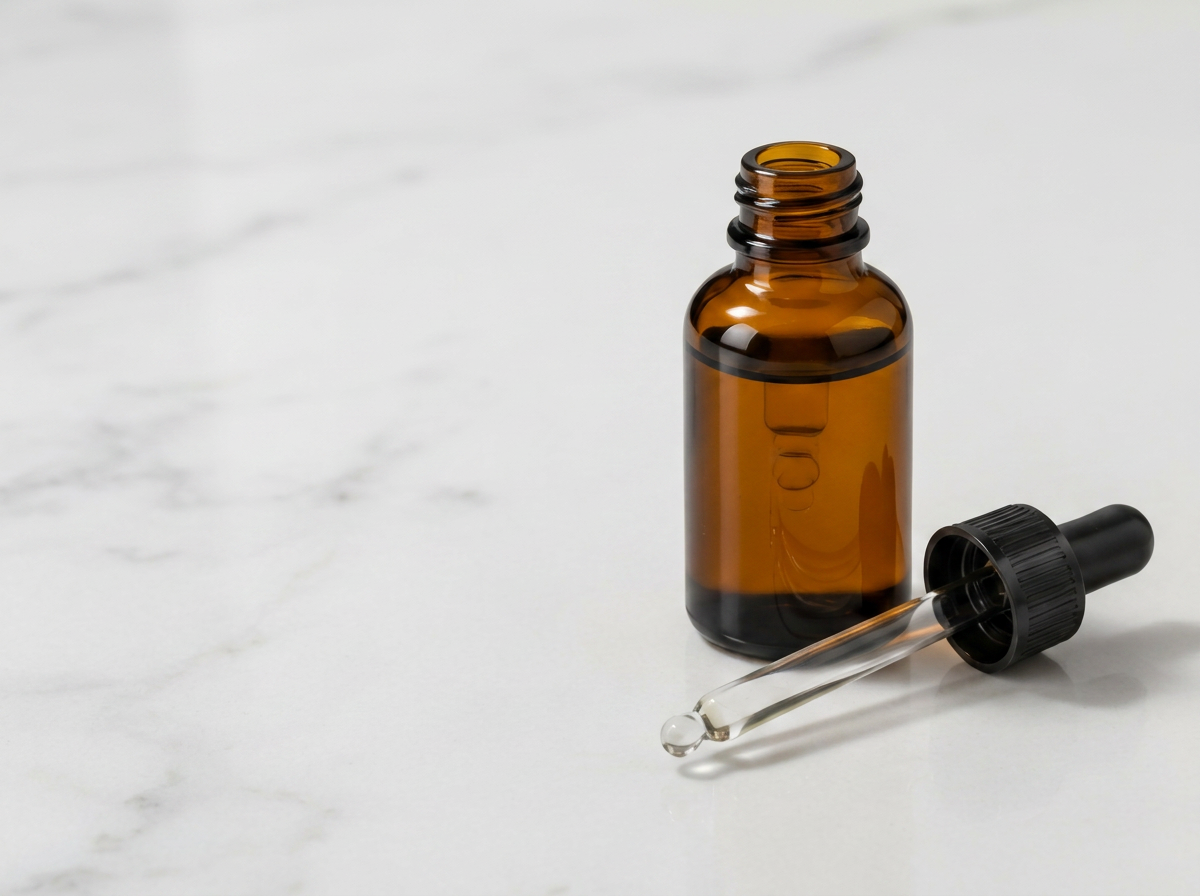
Buying liquid supplements wholesale looks simple on a line sheet: a bottle, a flavor, a serving size. In practice, liquids are the format where formulation, packaging, and logistics decisions matter most. Water-based products need a preservation system, dosing devices have to deliver a consistent serving, and a case of glass bottles weighs and ships very differently from a case of capsules.
This guide breaks down the three main liquid formats buyers see (drops, shots, and syrups), where each one sells, and the questions worth asking a supplier before a liquid SKU goes on the shelf or into an online catalog.
Why Buyers Add Liquids to the Mix
Liquids solve a real problem for shoppers who do not want to swallow pills. Parents buying for children, older adults, and people who prefer mixing a serving into water or juice all gravitate toward the format. Liquids also allow flexible serving sizes, which is why dropper products are common for single-nutrient items like vitamin D3 and B12.
For retailers, liquids add visual variety to a set that is otherwise dominated by bottles of capsules and tablets. For e-commerce sellers, they can differentiate a catalog, though they come with higher shipping costs and more breakage risk than solid formats. If you are weighing liquids against other options, our format comparison guide covers the tradeoffs side by side.
Liquid Supplements Wholesale Formats Compared
The word liquid covers several distinct product types. Each has its own typical packaging, serving size, and retail home.
| Format | Typical Serving | Common Packaging | Where It Sells |
|---|---|---|---|
| Drops | A measured dropperful or a set number of drops | 1 to 2 oz amber glass with glass dropper | Pharmacy, natural channel, e-commerce |
| Shots | A single-serve vial or small bottle | PET or glass shot bottles, often multipacks | Convenience, grocery checkout, gyms |
| Syrups | A teaspoon or tablespoon, often with a dosing cup | 4 to 8 oz PET or glass with measuring cup | Pharmacy, mass, kids' sections |
| Liquid concentrates | A capful mixed into water | Larger PET bottles | Natural channel, online |
Drops are compact and concentrated, which keeps freight manageable. Shots are convenient but carry the highest packaging cost per serving. Syrups are familiar to shoppers and work well for family products, but their larger bottles take up more shelf and more pallet space.
What to Check When Buying Liquid Vitamins Wholesale
Liquid vitamins wholesale programs deserve a closer look than solid formats because more can go wrong between filling and consumption. Before committing to a SKU, work through these points with your supplier.
Preservation and stability
Water-based liquids need a preservation system to control microbial growth, commonly potassium sorbate, sodium benzoate, or a combination, sometimes paired with pH control. Glycerin-based and oil-based products behave differently and may need less. Ask how the product is preserved, whether microbial testing is part of release, and what the stability data supports for shelf life. Some vitamins, including vitamin C and certain B vitamins, are less stable in solution than in dry form, so overages and expiration dating should be backed by real data.
Dosing accuracy
A dropper that delivers inconsistent volumes means the consumer gets inconsistent amounts. Confirm the serving size on the label matches how the product is actually dosed, whether that is a marked dropper, a measuring cup, or a single-serve shot. For drops, ask how the label's per-serving amounts were determined for the specific dropper used.
Taste and texture
Liquid formats expose flavor in a way capsules never do. Minerals, B vitamins, and many botanicals taste strongly, and masking them takes work. Request samples of the finished product, not just a flavor description, and evaluate them the way a customer would.
Storage instructions
Some liquids carry refrigerate-after-opening or shake-well instructions. These are fine for the right product, but they affect how the item is merchandised and how customers perceive convenience. Know them before you build your assortment.
Packaging and Freight Realities
Packaging is where liquid supplements differ most from other formats in total landed cost. Glass protects light-sensitive ingredients and presents well, but it is heavy and breakable. PET is lighter and more forgiving in transit, though it is not the right choice for every formula.
- Closures should include a tamper-evident feature, such as an induction seal under the cap or a breakaway band on dropper assemblies.
- Droppers ship either assembled in the bottle or as a separate cap and dropper, which affects leak risk in transit.
- Cases need dividers or partitions for glass, and pallets need to be built to prevent crushing.
- Liquids can be affected by freezing in winter shipments and by heat in summer, so ask about seasonal shipping practices.
- Dimensional weight adds up quickly for shots and syrups when you are shipping parcels to e-commerce customers.
Products containing iron have additional requirements. Federal rules require a specific accidental-overdose warning on iron-containing supplements, and child-resistant packaging applies once a package contains a set amount of elemental iron. Liquid iron products for families should be reviewed carefully on both points.
Working With a Liquid Supplement Manufacturer or Distributor
Whether you are buying finished stock or developing your own product with a liquid supplement manufacturer, the documentation standard should be the same as for any other format. The facility should operate under 21 CFR Part 111, the cGMP rule for dietary supplements, and every lot should be traceable.
- Request a lot-specific Certificate of Analysis showing identity and potency results, plus microbial results for water-based products.
- Confirm the lot and expiration code appear on both the bottle and the case.
- Review the Supplement Facts panel for serving size, amounts per serving, and any required warnings.
- Ask what shelf life the stability data supports and how the product should be stored in your warehouse.
- Clarify minimum order quantities and pricing tiers, since liquids often carry different MOQs than solid formats.
If you are new to reading lab documents, our guide on how to read a Certificate of Analysis walks through what each section means.
With liquids, the bottle, the dropper, and the case pack matter nearly as much as the formula inside.
Where Liquids Fit in Your Assortment
Most buyers do best treating liquids as a targeted addition rather than a core format. Single-nutrient drops fill a gap for shoppers who dislike pills. Shots can work at checkout and in convenience settings where impulse purchases drive sales. Syrups belong where families shop. Adding a small number of liquid SKUs to a set built on gummies and capsules lets you test demand without committing heavily to a format that is costlier to ship and store.
Track sell-through and damage rates separately for liquids during the first few months. If breakage or leak complaints show up, the fix is usually in the closure, the case pack, or the shipping method rather than the formula.
How RV Pharma Supports Liquid Programs
RV Pharma is a wholesale nutraceutical distributor that stocks liquids alongside gummies, capsules, softgels, powders, and other formats for retailers, pharmacies, distributors, and e-commerce sellers across North America. Products come from cGMP compliant, FDA registered, third-party tested supply, with lot and expiration coding on bottle and case and lot-specific COAs on request. You can browse liquid products or reach the team at quote@rvpharma.com for an itemized quote.
Frequently asked questions
Are liquid supplements absorbed better than pills?
Liquids skip the disintegration step that tablets and capsules go through, but that does not automatically mean better absorption for every nutrient. Absorption depends on the specific ingredient, its form, and the individual. Buyers should avoid marketing liquids with broad absorption claims unless the specific product has evidence to support them.
How long do liquid supplements last?
Shelf life depends on the formula, preservation system, and packaging. Many liquid supplements carry expiration dates in the range of one to two years from manufacture, while some require refrigeration after opening. Ask the supplier what their stability data supports and check the expiration date printed on each bottle and case.
What minimum order quantities apply to liquid supplements wholesale?
MOQs vary by supplier, product, and packaging. Stock liquids are usually available in smaller quantities than custom formulas, which require minimums tied to batch sizes and component orders. Request an account-specific quote that itemizes pricing by volume tier so you can compare options accurately.
Sourcing a program in this category? A distribution specialist can walk through formats, MOQs, and lead times with you.
Request Wholesale Pricing