Packaging Health Supplements for Shipping, From Dock to Door
Most supplement damage happens between the dock and the customer's door. Here is how to protect bottles, cases, and parcels from crushing, leaks, heat, and cold along the way.
A supplement can pass every lab test and still reach the customer as a crushed bottle, a leaking dropper, or a clump of melted gummies. Packaging health supplements for shipping is about protecting what the lab already verified, from the moment a pallet leaves the dock until a parcel lands on a doorstep.
This guide walks through each layer of protection, starting with the unit itself and working outward to cases, pallets, and parcels, along with the seasonal issues that cause the most damage claims.
Layer One: The Unit Package
The bottle, tube, or pouch is the first line of defense. Most shipping problems that show up as customer complaints start here.
- Induction seals bond a foil liner to the bottle rim, providing tamper evidence and a barrier against leaks and moisture.
- Closures should be torqued correctly. Caps applied too loosely can back off during vibration, and caps applied too tightly can crack or strip.
- Desiccants help control moisture for gummies, tablets, and capsules. Choose the right size for the bottle and product.
- Headspace should be reasonable. Too much empty space lets tablets and capsules rattle and chip, which is why some products use a cotton or rayon coil.
- Liquids benefit from leak-resistant dropper assemblies, or droppers packed separately from a sealed bottle.
Every unit should also carry lot and expiration coding so any damage issue can be traced back to a specific production and shipment.
Layer Two: The Shipping Case
The corrugated case protects units during warehouse handling, truck transit, and stacking. Case strength is commonly specified using edge crush test (ECT) ratings, which relate to stacking strength, or burst strength, which relates to resistance to punctures and rough handling.
| Case Element | Why It Matters |
|---|---|
| Board strength (ECT or burst rating) | Must support stacking weight in warehouses and trailers |
| Correct fit | Loose units shift and scuff, while overpacked cases bulge and weaken |
| Partitions or dividers | Essential for glass bottles and useful for tall, narrow containers |
| Case labeling | Product name, count, lot, and expiration on the outside for receiving and rotation |
| Tape and closure | Proper sealing so cases don't open when stacked or handled |
Protective packaging for health supplements at the case level does not need to be elaborate. The biggest improvements usually come from a correct fit and adequate board strength rather than extra fill.
Layer Three: The Pallet
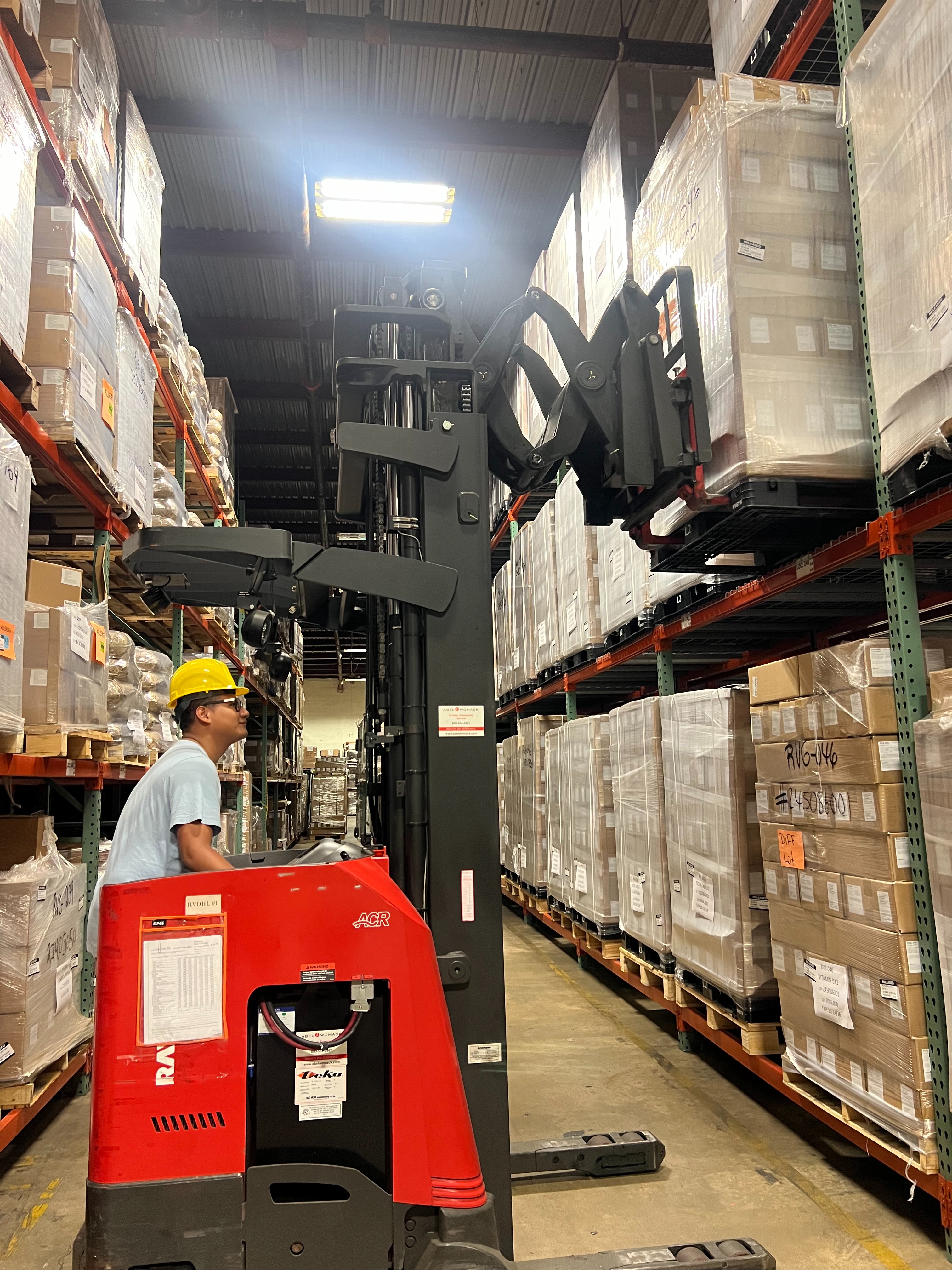
For wholesale orders, pallets carry most of the weight. A well-built pallet protects product far better than any amount of padding inside individual cases.
- Stack cases in columns, corner on corner, to take full advantage of case strength. Interlocked stacking adds stability but reduces compression strength.
- Keep cases within the pallet footprint. Overhang lets the case walls hang unsupported and crush.
- Use corner boards and top sheets on tall or heavy loads.
- Stretch wrap tightly, anchoring the wrap to the pallet base.
- Label the pallet clearly with contents, lot numbers, and any handling notes such as do not stack or protect from heat.
Most supplement damage is not caused by a single drop. It builds up from vibration, stacking pressure, and temperature over the trip.
Packaging Health Supplements for Shipping by Parcel
Parcel shipping, the mode used for e-commerce orders and small wholesale replenishment, is rougher than pallet freight. Packages are sorted on conveyors, dropped, and stacked with heavier boxes. The ISTA test procedures, including ISTA 3A for individual parcel shipments, are widely used to simulate these conditions and evaluate packaging.
- Right-size the box. Oversized boxes need more void fill and raise dimensional weight charges.
- Use void fill such as paper, air pillows, or molded inserts so bottles cannot move.
- Keep glass bottles separated with dividers or wraps.
- Place liquids in a sealed bag inside the carton so a leak does not ruin the entire shipment.
- Padded mailers work for single pouches or durable plastic bottles, but not for glass or crushable cartons.
For more on how fulfillment operations handle parcels, see our supplement fulfillment guide.
Heat, Cold, and Seasonal Precautions
Temperature is the most underestimated shipping risk for supplements. Trailers and delivery vans can get far hotter than outdoor temperatures in summer, and some formats are more vulnerable than others.
| Format | Main Risk | Common Precaution |
|---|---|---|
| Gummies | Softening, sticking, and melting in heat | Insulated liners or cold packs in hot months, faster transit |
| Softgels | Sticking together and shell deformation in heat | Avoid long hot transits, keep away from direct sun |
| Liquids | Freezing and leaks in winter, expansion in heat | Leak-resistant closures, seasonal routing |
| Powders | Clumping from humidity | Sealed liners and tight closures |
| Tablets and capsules | Moisture uptake in humid conditions | Desiccants and induction seals |
Practical steps help. Many shippers avoid sending heat-sensitive parcels late in the week so packages do not sit in a warehouse over a weekend. Faster transit services in peak summer can cost less than replacing damaged product. For receiving teams, moving temperature-sensitive products into climate-controlled storage promptly matters as much as how they were shipped.
Choosing Supplement Packaging Solutions
The right supplement packaging solutions depend on your channel mix. Pallet shipments to distribution centers need strong cases and good pallet builds. E-commerce needs right-sized parcel packaging and seasonal temperature plans. Track damage and complaint data by format, carrier, and season, and adjust packaging where the data points.
When damage does happen, document it before anything else. Photograph the outer carton, the pallet, and the damaged units, note the lot numbers, and record the condition on the delivery receipt before signing. Carriers usually require notations at delivery for visible damage and set short windows for reporting concealed damage. Good records protect your claim and show which layer of packaging failed, which is the information you need to fix the problem on the next shipment.
Finally, review packaging whenever something changes: a new bottle size, a new carrier, a new warehouse, or a move into a hotter region. Packaging that worked for one lane can fail on another.
It is also worth testing before scaling. Send a few sample shipments through your real carriers and lanes, including a hot-weather run if you ship gummies or softgels, and inspect the results on arrival. A short trial costs little compared with a season of damage claims, and it often reveals simple fixes, such as a tighter-fitting box or a different void fill, that make a large difference over thousands of orders. Repeat the test when you change bottle sizes, carriers, or packaging suppliers, since small changes in fit or material can shift results. Keep photos and notes from each trial so the next packaging decision starts from evidence rather than guesswork.
How RV Pharma Ships
RV Pharma is a wholesale nutraceutical distributor supplying retailers, pharmacies, distributors, and e-commerce businesses across North America. Stock orders ship in an estimated 3 to 10 days, and every lot carries lot and expiration coding on both bottle and case for traceability. Packing and distribution programs are available alongside private label. See the shipping page for details or call 631-730-7724.
Frequently asked questions
How do you keep gummies from melting during shipping?
Use insulated liners or cold packs during hot months, choose faster transit services, and avoid shipping late in the week so parcels do not sit in warm facilities over a weekend. Receiving teams should move gummies into climate-controlled storage promptly. Bottles with good seals and appropriate headspace also help limit sticking.
What is an induction seal on a supplement bottle?
An induction seal is a foil liner bonded to the bottle rim using electromagnetic heating after the cap is applied. It provides tamper evidence, helps prevent leaks, and adds a barrier against moisture and air. It is standard across most supplement bottles and is especially important for products shipped by parcel.
What box strength do supplement shipping cases need?
It depends on case weight, stacking height, and shipping mode. Corrugated cases are commonly specified by edge crush test (ECT) rating for stacking strength or by burst strength for puncture resistance. Heavier cases, glass bottles, and tall pallet stacks call for stronger board. Packaging suppliers can recommend ratings based on actual loads.
Sourcing a program in this category? A distribution specialist can walk through formats, MOQs, and lead times with you.
Request Wholesale Pricing