Private Label Capsules: Why Capsules Remain the Workhorse Format
Capsules are the format that fits almost any formula at a sensible cost. Here is what buyers should know about shells, sizes, fill weights, and packaging before placing an order.
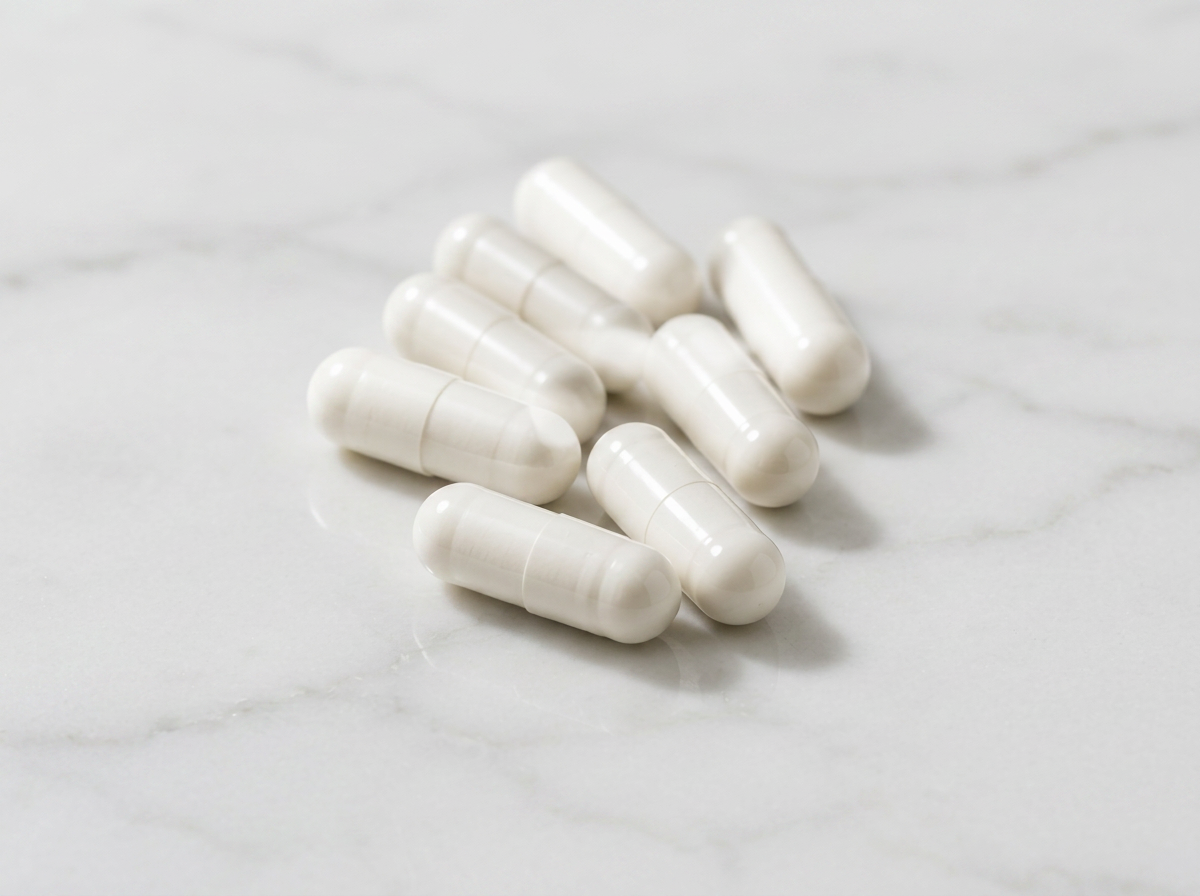
Gummies get the headlines, but private label capsules still do most of the heavy lifting on supplement shelves. Walk down any vitamin aisle or scroll any marketplace category and capsules show up in nearly every segment, from single-ingredient botanicals to probiotics to complex blends. There are good reasons for that. Capsules hold a wide range of ingredients, protect them reasonably well, need few excipients, and cost less per serving than most other formats.
For retailers and brand owners, capsules are often the lowest-risk way to launch a new SKU or extend an existing line. This guide covers what makes the format work, where its limits are, and what to confirm before you place an order.
Why private label capsules stay popular
A capsule is a two-piece shell filled with powder, granules, or occasionally pellets. The shell is sealed by the fit of the two halves, and in some cases banded for extra security. That simple design brings several practical advantages.
- Formula flexibility. Most powdered ingredients can be encapsulated with little reformulation, including botanicals, minerals, amino acids, and many vitamins.
- Few added ingredients. A capsule often needs only a flow agent or filler, which suits shoppers who read labels closely.
- Taste masking. Bitter or strong-smelling ingredients are enclosed in the shell, which is harder to do in a chewable or gummy.
- Cost. Capsule filling is fast and well understood, so unit costs are usually lower than gummies or softgels for the same active amount.
- Shelf life. With proper packaging and moisture control, capsule products commonly carry two-year or longer expiration dating, depending on the ingredients.
Gelatin vs. vegetarian shells
The first decision in any capsule program is the shell material. The two common choices are gelatin and hypromellose (HPMC), a plant-derived cellulose. Pullulan, made by fermentation, is a less common vegetarian option.
| Shell type | Source | Strengths | Considerations |
|---|---|---|---|
| Gelatin | Bovine or porcine | Lower cost, fast dissolution, widely available | Not suitable for vegetarian, vegan, or some religious diets |
| HPMC | Plant cellulose | Vegetarian and vegan friendly, lower moisture content | Slightly higher cost; dissolution profile differs |
| Pullulan | Fermented tapioca starch | Vegan, good oxygen barrier, clear appearance | Premium price, less common |
HPMC has become the default for many brands because "vegetarian capsule" is a claim shoppers look for, and its lower moisture content can help with hygroscopic or moisture-sensitive ingredients such as probiotics. Gelatin is still a sound choice where cost matters most and dietary positioning is not a factor. Delayed-release shells, often HPMC-based, are also available for ingredients that benefit from passing through the stomach before dissolving.
Sizes, fill weights, and serving math
Capsule sizes run from 000 (largest) down to 5 (smallest), with 00 and 0 being the most common for adult supplements. How much a capsule holds depends heavily on the density of the powder. A dense mineral fills far more milligrams into a size 00 than a fluffy botanical extract does. Our capsule sizes chart lists typical volumes and fill ranges by size.
This is where serving size planning matters. If a formula needs 1,500 mg of active ingredients, it will likely be a two- or three-capsule serving rather than one very large capsule. Buyers should check that the label dose matches what the capsule can realistically hold, including any excipients needed for flow. Size 000 capsules can hold more, but many shoppers find them hard to swallow, which shows up in reviews and return rates.
The right capsule size is the one your customer will actually take every day.
Where capsules are not the best fit
Capsules are versatile, but some formulas are better served by another format:
- Oils and fat-soluble liquids such as fish oil or vitamin E generally belong in softgels. See softgel vs. capsule for the comparison.
- Very high-dose formulas, such as a full-spectrum multivitamin with minerals, may need a tablet to fit the dose into a reasonable number of pieces.
- Products aimed at people who dislike swallowing pills are better as gummies, powders, or chewables.
- Large single doses measured in grams, like creatine or collagen, usually make more sense as powders.
What to ask a capsule supplement manufacturer
Whether you work directly with a capsule supplement manufacturer or through a distributor, the quality questions are the same. A buyer should be able to get clear answers to each of these before approving a product:
- Is the facility cGMP compliant under 21 CFR 111, and what third-party audits or certifications does it hold?
- Are incoming raw materials tested for identity, and how are finished products tested for potency, microbiology, and heavy metals?
- Is a lot-specific certificate of analysis available for every batch?
- What shell material is used, and is it certified for any claims you plan to make, such as vegetarian, kosher, or halal?
- What is the fill weight tolerance, and how is weight variation checked during production?
- How is moisture controlled in packaging, including desiccants and induction seals?
- What lot and expiration coding appears on the bottle and on the case?
Packaging and presentation
Most private label capsule supplements ship in HDPE or PET bottles with an induction seal and a desiccant, then a cap and optional shrink band. Bottle size should match count and capsule size, leaving enough headspace for the product to settle without looking half empty. Amber or opaque bottles help with light-sensitive ingredients. Blister packs are an option for travel formats or premium positioning but add cost.
On the label, confirm the Supplement Facts panel lists the serving size in capsules, the amount per serving of each dietary ingredient, and the shell material in the other ingredients list. The domestic address or phone number for adverse event reporting is required, and any structure/function claims need the FDA disclaimer.
Stock capsules vs. custom formulas
A stock capsule program lets you put your label on an existing, tested formula. It is the fastest route to market and keeps minimums manageable. A custom formula gives you control over ingredients and doses but involves formulation, stability planning, and longer timelines, and it is typically quoted per formula. Many brands start with stock products for their core line and move top sellers to custom formulas once they know the volume is there.
RV Pharma supplies capsules alongside gummies, softgels, tablets, powders, and other formats from cGMP-compliant, NSF/ANSI 455-2 and third-party tested manufacturing, with lot and expiration coding on every bottle and case. Browse our capsule range or send your formula details for an itemized, account-specific quote.
Frequently asked questions
What is the difference between gelatin and vegetarian capsules?
Gelatin capsules are made from animal collagen, usually bovine or porcine, and tend to cost less. Vegetarian capsules are most often made from HPMC, a plant cellulose, and suit vegetarian and vegan shoppers. HPMC also has lower moisture content, which can help with moisture-sensitive ingredients. Both are widely used in private label capsule supplements.
How many milligrams fit in a size 00 capsule?
It depends on the density of the powder. A size 00 capsule has a fixed volume, so a dense mineral powder fills to a much higher weight than a light botanical extract. As a rough range, many size 00 fills fall somewhere between about 500 and 900 mg. Your manufacturer should confirm the actual fill weight for your formula.
How long do private label capsules last?
Shelf life depends on the ingredients, packaging, and storage conditions. Many capsule products carry around two years of expiration dating when packed with a desiccant and induction seal and stored in a cool, dry place. Sensitive ingredients such as probiotics or some vitamins may need shorter dating or stability testing to support the date on the label.
Are capsules or tablets better for private label?
Capsules need fewer excipients, mask taste well, and are simple to produce, which makes them a strong default. Tablets can hold more material per piece, so they suit high-dose formulas like multivitamins with minerals. The better choice depends on your dose, ingredient list, and how your customer prefers to take supplements.
Sourcing a program in this category? A distribution specialist can walk through formats, MOQs, and lead times with you.
Request Wholesale Pricing