Capsule Supplement Manufacturers: Encapsulation, Fill Weights, and Shell Options
Capsules look simple, but fill weight, powder flow, and shell choice decide whether a formula works. Here's how capsule supplement manufacturers approach each one and what buyers should check.
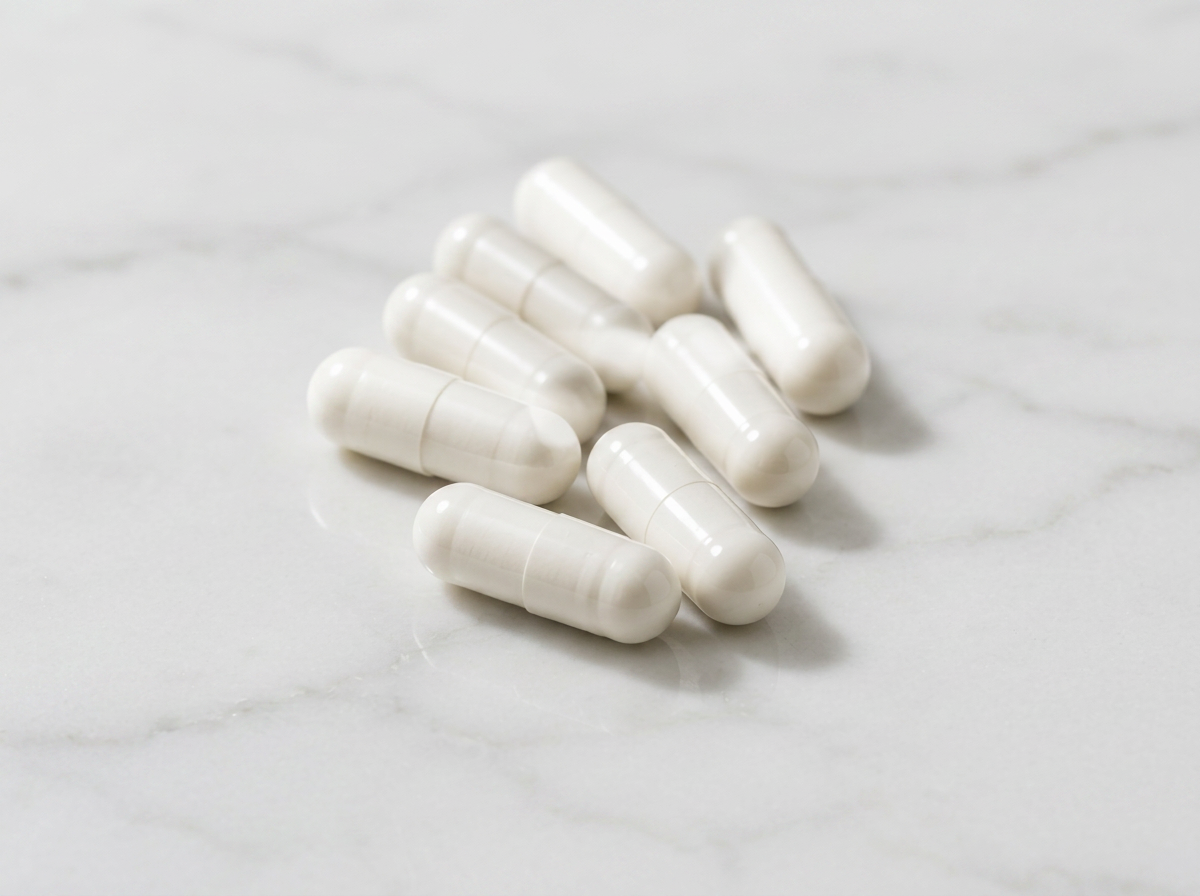
Capsules are the workhorse of the supplement industry. They hold a wide range of powders, need relatively few excipients, and are familiar to nearly every customer. That familiarity hides a fair amount of technical work. A capsule supplement manufacturer has to get powder to flow consistently, fill each shell to an accurate weight, and choose a shell that suits both the formula and the brand's positioning.
Here's how that work breaks down and what to look for when you're sourcing capsule product.
How encapsulation works
Hard capsules come as two pieces, a body and a cap. Encapsulation machines separate the two, fill the body with powder, rejoin them, and eject the finished capsule. Along the way, powder is dosed in one of two main ways:
- Tamping disc systems compress powder into bores in a dosing disc in several stages, then push the formed plug into the capsule body.
- Dosator systems lower a hollow tube into a powder bed, compress a slug inside the tube, and release it into the body.
Small operations and pilot work may use semi-automatic machines, while production runs happen on fully automatic machines that fill very large numbers of capsules per hour. After filling, capsules are typically polished and dedusted, checked for weight, and sometimes passed through a metal detector before bottling.
Fill weights and capsule sizes
Capsule size limits how much powder fits in each shell, and the actual fill weight depends on the powder's bulk density. A fluffy botanical powder might fill a capsule at a fraction of the weight of a dense mineral. That's why the same size capsule can hold very different amounts depending on the formula.
| Size | Approx. volume | Typical fill range* |
|---|---|---|
| 000 | ~1.37 mL | ~800–1,600 mg |
| 00 | ~0.95 mL | ~550–1,100 mg |
| 0 | ~0.68 mL | ~400–800 mg |
| 1 | ~0.50 mL | ~300–600 mg |
| 2 | ~0.37 mL | ~200–450 mg |
*Ranges are rough and assume bulk densities between about 0.6 and 1.2 g/mL. Your formula's real fill weight has to be confirmed in development. For more on sizing, see our capsule sizes chart.
Size 00 is the most common choice for adult supplements because it balances capacity and ease of swallowing. Size 000 holds more but is large enough that many customers find it uncomfortable. If a formula needs more than two size 00 capsules per serving, it's worth asking whether a tablet or powder would serve customers better.
Powder flow and excipients
Encapsulation machines move fast, and powder has to keep up. Sticky, fine, or electrostatic powders don't flow evenly into dosing stations, which leads to weight variation from capsule to capsule. Some botanicals and probiotics are notoriously difficult. Manufacturers deal with this by adjusting particle size, granulating the blend, or adding small amounts of flow agents and lubricants such as silicon dioxide, magnesium stearate, or rice-based alternatives for brands that want a cleaner ingredient statement.
These choices show up under "Other ingredients" on the label, so decide early whether your positioning allows them. A manufacturer that can run a formula without flow aids is valuable, but only if the capsules still meet weight and uniformity specifications. Removing an excipient to shorten the label isn't worth it if fill weights start to wander.
Liquid-filled hard capsules
Hard capsules can also hold oils or liquid suspensions if they're sealed or banded to prevent leaking. It's a niche option compared with softgels, but it can suit vegetarian oil formulas or small batches. Fewer facilities offer it, so ask directly.
Shell options: gelatin, HPMC, and more
The shell affects labeling, stability, and who will buy the product.
Gelatin
Gelatin capsules are made from animal collagen, usually bovine or porcine. They're widely available, cost-effective, and run well on most equipment. They're not suitable for vegan or vegetarian claims, and some customers avoid them for religious or dietary reasons.
HPMC (vegetarian)
Hydroxypropyl methylcellulose capsules are plant-derived and support vegetarian and vegan positioning. They generally hold less moisture than gelatin shells, which can help with moisture-sensitive or hygroscopic fills. They usually cost somewhat more than gelatin.
Specialty shells
Pullulan capsules are another plant-based option with good oxygen barrier properties. Acid-resistant or delayed-release shells are designed to hold together longer in the stomach. Any label language about release timing has to be supported by testing, so don't assume a shell alone justifies a claim.
The shell is part of the label: it decides whether you can say vegetarian, and it shows up in the ingredient statement.
Quality control in capsule manufacturing
A capsule manufacturing company working under 21 CFR 111 builds in several checks. The most important ones for buyers to understand are:
- Blend uniformity, so each capsule gets the same proportion of actives
- In-process weight checks throughout the run, since fill weight drift means potency drift
- Disintegration testing to confirm capsules break apart as expected
- Finished product testing for identity or strength of key actives, microbiology, and heavy metals
- Visual inspection for split, dented, or poorly closed capsules
Ask for a lot-specific certificate of analysis and compare it to the specification. If a supplier can't provide one, that's a problem regardless of price.
Choosing a capsule supplement manufacturer
When you evaluate a capsule manufacturer, start with the basics: cGMP compliance, third-party audits, and lot-level documentation. Then ask format-specific questions. Can they run both gelatin and HPMC? How do they handle powders that flow poorly, and what excipients do they use to fix it? What sizes can they run? Do they bottle in-house or ship bulk to a packager?
Many buyers start their search with "capsule manufacturers USA" and limit the list to domestic facilities. Domestic production can simplify audits, shorten transit, and make communication easier, but country of origin doesn't guarantee quality by itself. The same questions apply to any supplier, and the same documentation should be available regardless of where production happens.
Stock capsules vs. custom encapsulation
If your formula is a common one, stock capsules let you skip development, stability work, and higher custom minimums. Custom encapsulation makes sense when your formula is distinctive or your volume is large enough to justify it. Comparing capsules with tablets can also help if you're still deciding on format.
RV Pharma is a wholesale nutraceutical distributor carrying stock capsules alongside gummies, softgels, tablets, and other formats. Every lot ships with lot and expiration coding on the bottle and case, and lot-specific COAs are available on request. Browse our capsule range or reach out for an itemized quote.
Frequently asked questions
How much powder fits in a size 00 capsule?
It depends on the powder's bulk density. A size 00 capsule has a volume of roughly 0.95 mL, which typically works out to somewhere around 550 to 1,100 mg for common supplement powders. Light, fluffy botanicals sit at the low end and dense minerals at the high end. The real fill weight is confirmed during development.
What is the difference between gelatin and HPMC capsules?
Gelatin capsules are animal-derived, cost-effective, and run easily on most equipment. HPMC capsules are plant-based, support vegetarian and vegan claims, and generally hold less moisture, which can help with moisture-sensitive formulas. HPMC shells usually cost more. Both are common and both are acceptable in cGMP supplement manufacturing.
How do capsule manufacturers control potency?
They start with a uniform blend so actives are evenly distributed, then check capsule fill weights repeatedly during the run, since weight drift means potency drift. Finished lots are tested for identity or strength of key actives, along with microbiology and heavy metals. A lot-specific certificate of analysis should document those results.
Are capsules made in the USA better quality?
Not automatically. Domestic manufacturing can make audits, communication, and shipping easier, and U.S. facilities operate under FDA's cGMP rules. But quality depends on the specific facility's systems and testing. Evaluate any supplier on documentation, certifications, and lot-specific COAs rather than country of origin alone.
Sourcing a program in this category? A distribution specialist can walk through formats, MOQs, and lead times with you.
Request Wholesale Pricing