Supplement Inventory Management: FEFO, Reorder Points, and Stockouts
Supplements expire, sell seasonally, and come with retailer shelf-life rules. A practical guide to FEFO, reorder points, and safety stock that keeps shelves full without write-offs.
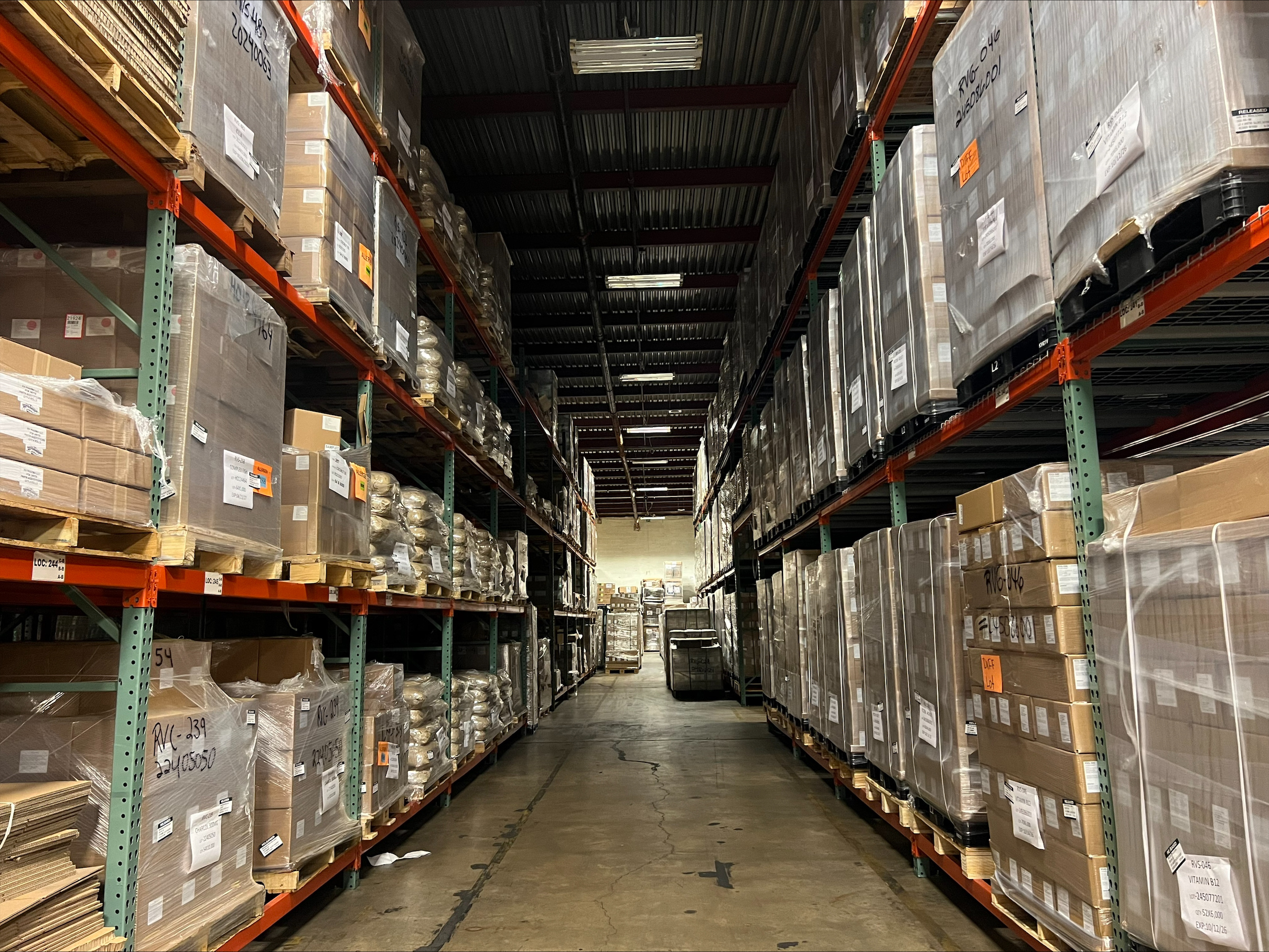
Supplement inventory management has two failure modes, and both cost money. Order too little and you stock out, lose sales, and possibly lose shelf space or marketplace ranking. Order too much and product ages on the shelf until it is too close to expiration for a retailer to accept or a customer to want. Unlike many consumer goods, supplements carry a printed expiration or best-by date, which turns every overstock decision into a countdown.
This guide covers the three tools that do most of the work: FEFO rotation, reorder points with safety stock, and shelf-life windows. It is written for distributors, retailers, and e-commerce sellers managing anywhere from a handful of SKUs to a full catalog.
FEFO inventory: first expired, first out
Most warehouses know FIFO, first in, first out. For supplements, FEFO (first expired, first out) is the better rule. The lot with the earliest expiration date ships first, regardless of when it arrived. Usually FIFO and FEFO give the same answer, but not always. A later shipment can contain an older lot, and returned or transferred stock can re-enter inventory with a shorter remaining life.
Running FEFO inventory requires three things:
- Lot and expiration capture at receiving. Every case and every bottle should carry a readable lot number and expiration date, and your system should record both when stock is received.
- Location control. Each lot needs a known location so pickers can go to the right one. Mixing lots in the same bin makes FEFO hard to enforce.
- System-directed picking. Your warehouse or inventory system should tell pickers which lot to pull, rather than relying on them to check dates.
For smaller operations without a warehouse management system, a simple approach works: one lot per shelf position, oldest lot at the front or at the pick face, and a weekly check of the nearest expiration dates.
Shelf-life windows and minimum remaining life
Expiration is not the only date that matters. Most retail buyers and marketplaces require a minimum amount of remaining shelf life at receipt. The exact number varies by account and is usually written into vendor agreements, but requirements often run in the range of many months for retail accounts. Amazon also enforces its own minimum remaining life for expiration-dated products at check-in.
That means every SKU effectively has a sellable window that is shorter than its printed shelf life. If a product has a 24-month shelf life and a key account requires 12 months remaining at receipt, you have about 12 months to sell that lot into that account, minus the time it spends in transit and in your warehouse. Build that window into ordering decisions.
| Metric | What it tells you |
|---|---|
| Days of supply | Current stock divided by average daily sales |
| Months to expiry | Time left before the earliest lot expires |
| Sellable window | Months to expiry minus the customer's minimum remaining life requirement |
| Aging risk | Days of supply compared to the sellable window; if supply exceeds the window, you will have write-offs |
A lot that will outlast your sales velocity but not your customers' shelf-life requirements is already a write-off.
Supplement reorder planning: reorder points and safety stock
A reorder point tells you when to place the next order. The basic formula is:
Reorder point = (average daily demand × lead time in days) + safety stock
Lead time here means the full time from placing an order to having sellable stock on the shelf: order processing, production or picking, transit, and receiving. For stock products from a distributor, that might be days to a couple of weeks. For custom or private-label production, it is usually much longer and should be confirmed with the manufacturer.
Safety stock covers variability, both in demand and in lead time. A common formula uses a service level factor (z), the standard deviation of daily demand, and the square root of lead time. For many small and midsize sellers, a practical starting point is to hold a buffer equal to a set number of days of average demand, then adjust based on how often you get close to zero.
A worked example
- Average daily sales: 40 bottles
- Lead time from order to shelf: 10 days
- Safety stock: 7 days of demand, or 280 bottles
- Reorder point: (40 × 10) + 280 = 680 bottles
When on-hand stock for that SKU falls to 680 bottles, place the next order. Then check the order quantity against the sellable window. If a large order would give you more supply than you can sell before the shelf-life cutoff, split it into smaller, more frequent orders.
Supplement inventory management without stockouts or overstock
- Segment SKUs. Fast movers get tighter monitoring and higher safety stock. Slow movers get lower stock and more frequent review for aging.
- Adjust for seasonality. Immunity, sleep, and hydration products have predictable seasonal swings. Raise reorder points ahead of the season and lower them after. Our seasonal demand calendar outlines typical patterns.
- Watch promotions. A retailer promotion or marketplace deal can multiply demand for a few weeks. Build promo volume into orders separately rather than letting it distort your baseline.
- Count regularly. Cycle counts on high-value and fast-moving SKUs catch errors before they cause a stockout.
- Track lead time actuals. If orders consistently arrive later than planned, update your lead time in the formula.
Handling near-expiry stock
Even well-managed inventory will occasionally have lots approaching the end of their sellable window. Identify them early, at least a few months before the window closes, so you still have options: transferring them to channels with shorter remaining-life requirements, running a promotion, or reducing future orders so the next lot does not add to the problem. Never relabel or alter expiration dates. Dates are set by the manufacturer based on stability data, and changing them creates serious compliance issues.
Lot tracking ties all of this together. When you can see every lot, its expiration date, and where it is, FEFO, reorder planning, and recalls all get easier. Our lot numbers and traceability guide covers that side in more detail.
RV Pharma ships stock orders in an estimated 3–10 days, and every lot carries lot and expiration coding on bottle and case, which makes FEFO and reorder planning simpler on the receiving end. To see how ordering works, visit our how to order page.
Frequently asked questions
What is FEFO in supplement inventory?
FEFO stands for first expired, first out. It means the lot with the earliest expiration date is shipped or sold first, regardless of when it arrived. For supplements, FEFO is better than FIFO because it reduces the chance that product expires on the shelf or falls below a retailer's minimum remaining shelf-life requirement.
How do you calculate a reorder point for supplements?
Multiply average daily demand by the lead time in days, then add safety stock. For example, 40 bottles per day with a 10-day lead time and 280 bottles of safety stock gives a reorder point of 680. Also check order size against the product's sellable window so you do not overbuy short-dated stock.
How much shelf life do retailers require on supplements?
It varies by retailer and is usually set in the vendor agreement. Many retail accounts require a meaningful portion of shelf life remaining at receipt, often expressed as a minimum number of months. Amazon has its own minimum for expiration-dated products. Confirm the requirement for each account before placing large orders.
Sourcing a program in this category? A distribution specialist can walk through formats, MOQs, and lead times with you.
Request Wholesale Pricing