The Capsule Manufacturing Process: Blending, Filling, and Polishing
How two-piece supplement capsules go from raw powders to sealed bottles: shell choice, blend prep, filling, weight control, polishing, and release testing, with what buyers should ask at each stage.
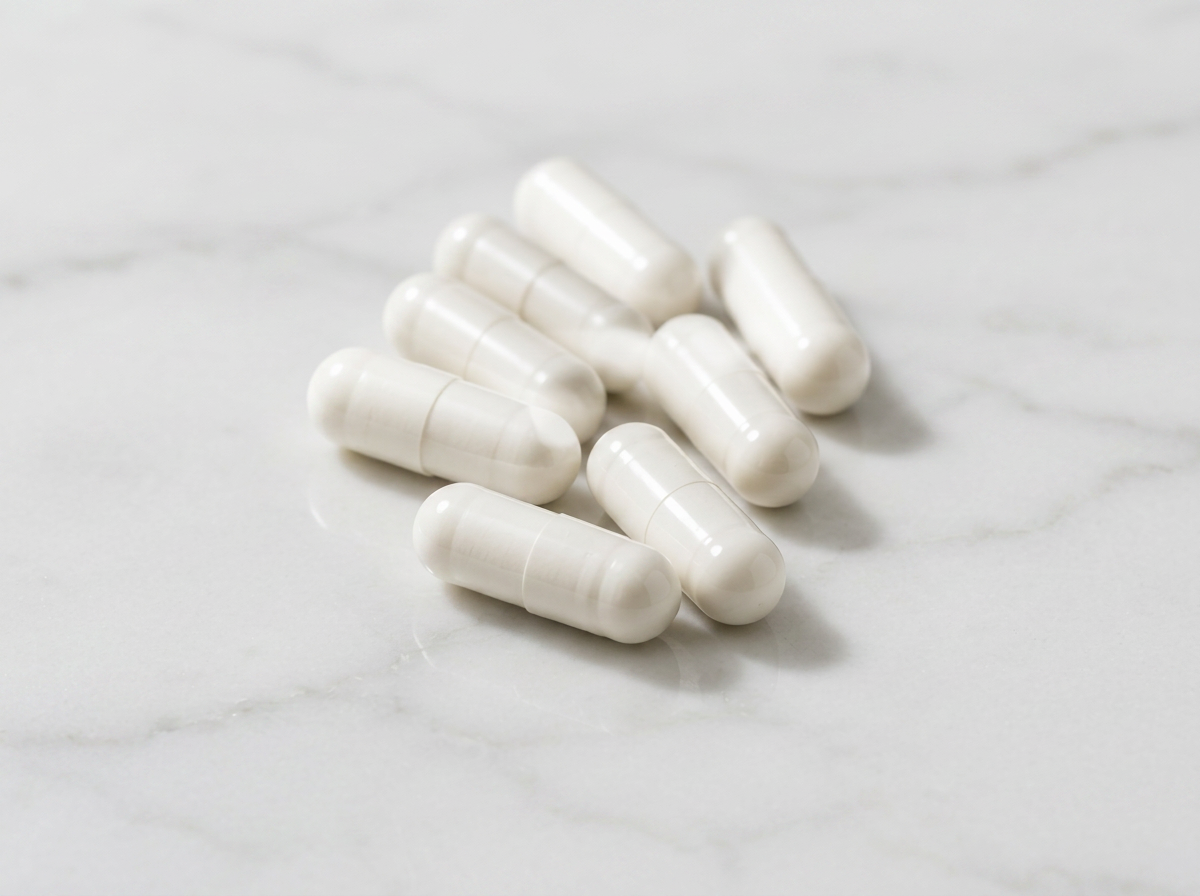
Two-piece capsules are one of the most common supplement formats because they handle a wide range of powders with fewer excipients than tablets. The capsule manufacturing process for supplements is really a filling process: empty shells are made by specialized shell producers, then a supplement manufacturer fills them with a blend, closes them, cleans them, and packages them under cGMP controls.
Here is how capsule production works from start to finish, and what each step means for product quality, consistency, and cost.
Where Empty Capsule Shells Come From
The manufacture of capsules as empty shells is its own industry. Shell makers dip stainless steel pins into a gelatin or HPMC solution, dry the film on the pins, strip it off, trim the bodies and caps to length, and join them loosely for shipment. Shells are produced in standard sizes, from 000 (the largest common size) down to 5, in clear, opaque, and colored versions.
A supplement manufacturer buys these shells and stores them under controlled temperature and humidity. Gelatin shells hold more moisture than HPMC shells and can turn brittle if they dry out or soft if they pick up humidity, so shell storage is part of the quality system, not an afterthought. Shell material also affects vegetarian, kosher, and halal positioning, so it is worth settling early.
Step 1: Component Testing and Dispensing
Like every supplement format, capsule production starts with components that meet written specifications. Under FDA's 21 CFR Part 111, the identity of each dietary ingredient must be confirmed before use, and other attributes such as purity, strength, and contaminant limits are verified by testing or by a qualified supplier certificate of analysis. Approved materials are weighed against the master manufacturing record and documented in the batch production record.
Step 2: Blending and Blend Characterization
The dispensed ingredients are milled or sieved if needed and blended until uniform. Capsule blends usually contain fewer excipients than tablet blends, but many still need a filler such as microcrystalline cellulose or rice flour to reach a consistent fill weight, and a flow agent or lubricant such as silicon dioxide or magnesium stearate to move smoothly through the filling machine.
Two properties drive capsule design at this stage:
- Bulk density, which determines how many milligrams fit in a given capsule size. A fluffy botanical may only fit a few hundred milligrams in a size 00, while a dense mineral fits much more.
- Flowability, which determines whether the powder fills each capsule evenly. Poor flow causes weight variation, and weight variation means dose variation.
Those two numbers often decide the capsule size and the number of capsules per serving, which in turn shape bottle count and cost. Our capsule sizes chart shows typical fill ranges by size.
Step 3: Encapsulation
The capsule making process itself follows the same basic sequence on every type of equipment:
- Rectification: shells are oriented so every body points the same direction.
- Separation: vacuum pulls the body away from the cap.
- Dosing: powder is metered into the body, either by tamping it into a dosing disc or by a dosator tube that picks up a slug of powder and ejects it.
- Closing: the cap is pushed back onto the body until it locks.
- Ejection: filled capsules are pushed out of the machine for cleaning and inspection.
Equipment scale ranges widely. Manual and semi-automatic fillers handle small batches and development runs, while fully automatic machines produce many thousands of capsules per hour. The choice affects cost per unit more than it affects the finished product, as long as the process is controlled.
In-Process Weight Control
Fill weight is the key control point. Operators pull capsules at set intervals, weigh them individually, and compare against target and acceptable range. Automatic checkweighers on larger lines can weigh every capsule and reject out-of-range units. Machine settings are adjusted during the run as powder behavior shifts.
Step 4: Polishing, Dedusting, and Inspection
Filled capsules come off the machine with powder clinging to the outside. A capsule polisher uses brushes and vacuum to remove that dust so the finished product looks clean and does not leave residue in the bottle. Many lines then pass capsules through a metal detector and an inspection or sorting step that removes split, dented, or empty units.
Most capsule complaints trace back to three things: weight variation, shell condition, and dust. Good process control catches all three before bottling.
Step 5: Testing, Release, and Packaging
Before release, the finished batch is checked against its specifications. Depending on the product, that can include identity, potency of key ingredients, microbial limits, heavy metals, and disintegration. Quality control reviews the batch production record and approves or rejects the batch, as Part 111 requires. Brands often add third-party testing for extra assurance.
Released capsules are counted into bottles, often with a desiccant, then sealed, capped, labeled, and coded with lot and expiration information. Reserve samples are held so any batch can be investigated later.
Questions to Ask About the Capsule Manufacturing Process
| Question | Why it matters |
|---|---|
| What shell material and size? | Affects vegetarian claims, moisture sensitivity, and serving size |
| How many capsules per serving? | Drives bottle count, cost per serving, and shopper perception |
| Which excipients are in the blend? | Clean-label shoppers read the other ingredients line |
| How is fill weight controlled? | Weight variation means dose variation |
| Is a lot-specific COA available? | Confirms that the batch you received meets specification |
Timing questions also belong on the list. Capsule filling itself is quick once a blend is approved, but component testing, finished product testing, and label approval all sit on the critical path. A realistic schedule accounts for each of them, especially for a first run of a new formula where the blend may need an adjustment after the pilot batch shows how it fills.
Capsules are often the fastest route to a new SKU because empty shells are a stock item and blends are easy to adjust. The tradeoff is dose density: bulky ingredients can push a serving to three or four capsules, where a tablet might need two.
RV Pharma distributes stock capsules alongside softgels, gummies, powders, and other formats to retailers, pharmacies, distributors, and e-commerce sellers across North America. Every lot is cGMP compliant, third-party tested, and coded on bottle and case, and lot-specific COAs are available on request.
Frequently asked questions
How are supplement capsules made?
Empty two-piece shells are purchased from shell manufacturers. The supplement maker blends the ingredients, then an encapsulation machine separates each shell, doses powder into the body, and closes the cap. Filled capsules are polished to remove dust, inspected, tested against specifications, and bottled with lot and expiration coding.
What determines how much powder fits in a capsule?
Capsule size and the blend's bulk density. A size 00 holds more than a size 0, and a dense mineral powder fits far more milligrams than a light, fluffy botanical in the same shell. Manufacturers measure density during development to choose the size and capsules per serving.
Why do capsule supplements contain fillers or flow agents?
Fillers help reach a consistent fill weight when the active dose does not fill the shell, and flow agents such as silicon dioxide or magnesium stearate help powder move evenly through the machine. Even flow keeps capsule weights consistent, which keeps the dose per capsule consistent.
Is capsule production faster than tablet production?
Often, yes, for development. Capsules need less formulation work than tablets because powders do not have to bond under compression, and empty shells are readily available. Production speed on automatic equipment is high for both formats, so total timing depends more on testing and scheduling.
Sourcing a program in this category? A distribution specialist can walk through formats, MOQs, and lead times with you.
Request Wholesale Pricing