The Tablet Manufacturing Process, Step by Step
A practical walk through how supplement tablets are made, from weighing raw materials to compression, coating, and release testing, and what each step means for quality, cost, and timing.
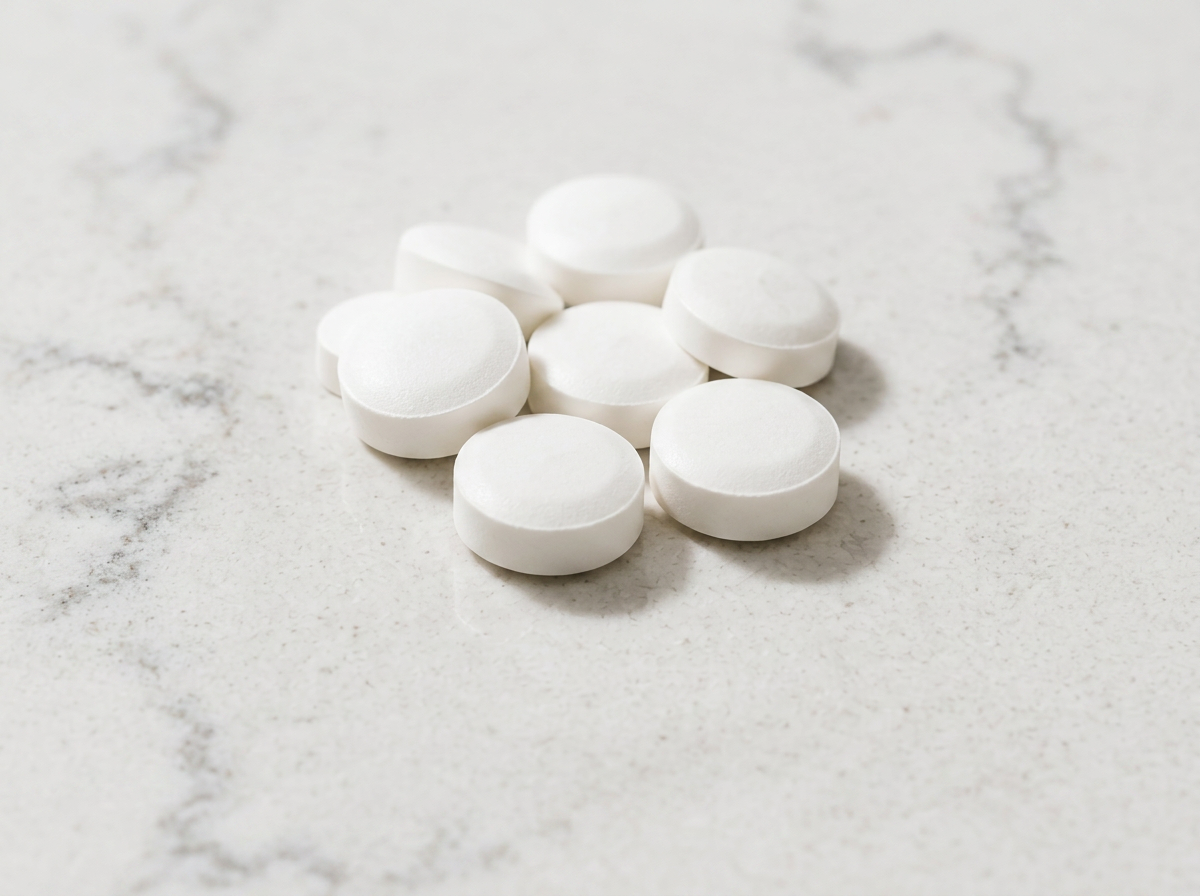
The tablet manufacturing process looks simple from the outside: powder goes in, tablets come out. In practice, getting a supplement tablet that holds together in the bottle, breaks down after it is swallowed, and contains what the label says takes a sequence of controlled steps. Each step has its own equipment, specifications, and records under the FDA's dietary supplement cGMP rule, 21 CFR Part 111.
For buyers and brand owners, understanding how tablets are manufactured explains why tablet formulas are quoted individually, why development takes testing, and what questions to ask a supplier about quality.
Step 1: Receiving, Testing, and Dispensing Raw Materials
Every batch starts with components. Under Part 111, a manufacturer must establish specifications for each component and confirm the identity of every dietary ingredient before use. Other attributes, such as purity, strength, and limits on contaminants like heavy metals and microbes, are verified through testing or, where allowed, a qualified supplier's certificate of analysis.
Approved materials are then dispensed: weighed out against the master manufacturing record for that product, with each weighing checked and documented in the batch production record. Mistakes here carry through the whole batch, so dispensing is one of the most controlled areas of the plant.
Step 2: Milling, Sieving, and Blending
Raw materials arrive with different particle sizes and densities. Milling and sieving bring them into a consistent range so they mix evenly and flow through equipment. The ingredients are then blended, typically in a V-blender, bin blender, or ribbon blender, for a validated time.
Blend uniformity matters most with low-dose ingredients. A vitamin present at micrograms per tablet, such as B12 or vitamin D, has to be distributed evenly through a much larger mass of minerals and fillers, so manufacturers often pre-blend small ingredients in stages before adding them to the main batch.
Step 3: Granulation or Direct Compression
Not every powder compresses well on its own. Tablet production usually follows one of three routes, chosen based on how the blend behaves.
| Method | How it works | Typical use |
|---|---|---|
| Direct compression | Blend is compressed as-is with compressible excipients | Blends that already flow and bind well; simplest and fastest |
| Wet granulation | Binder solution is added, mixture is granulated, dried, and sized | Poor-flowing or low-density powders, high-dose minerals |
| Dry granulation | Powder is compacted by roller or slugging, then milled into granules | Moisture- or heat-sensitive ingredients |
Granulation creates denser, more uniform particles that flow into the press evenly and bond under pressure. It adds time and equipment, which is one reason two formulas with similar ingredients can carry different costs.
Lubrication and Final Blend
Before compression, a lubricant is added, most often magnesium stearate or stearic acid, along with any glidant such as silicon dioxide. These keep the blend from sticking to punches and dies. Lubrication is done late and briefly because over-mixing a lubricant can coat particles and weaken tablets or slow disintegration.
Step 4: Compression
Compression is the heart of tablet manufacturing. A rotary tablet press feeds the blend into dies, and upper and lower punches squeeze it into a tablet at high force. The tooling determines shape, size, and any embossing or score line. Round tablets, ovals, and capsule-shaped caplets all come from different tooling sets.
Operators run in-process checks throughout the run, pulling samples at set intervals:
- Weight, since tablet weight is the main control on dose per unit.
- Hardness, to make sure the tablet survives bottling and shipping.
- Thickness, which affects bottle fill and consistency.
- Friability, a tumbling test that measures how much a tablet chips or crumbles.
- Disintegration, to confirm the tablet breaks apart in a set time under test conditions.
Press speed is a balance. Running faster increases output and lowers cost per tablet, but a blend that flows unevenly at high speed produces weight variation. Tooling wear, humidity in the compression room, and blend segregation during long runs can all push tablets out of specification, which is why sampling continues from the first tablet to the last rather than only at startup.
A tablet has two jobs that pull against each other: stay intact until it is swallowed, then fall apart quickly.
Step 5: Coating
Many supplement tablets are coated. A film coat, a thin polymer layer sprayed on in a rotating pan, makes tablets easier to swallow, masks taste and odor, adds color, and adds some protection from moisture. Sugar coating is an older, thicker approach used less often today. Enteric or delayed-release coatings are designed to resist stomach acid, and any label statement about delayed release should be backed by testing.
Coating adds a drying step and more material, but for large tablets, strong-tasting botanicals, and multivitamins it often makes the difference between a product people finish and one they abandon.
Step 6: Final Testing, Release, and Packaging
Finished tablets are tested against the product's specifications before release. Part 111 requires a quality control review and approval of the batch record, and manufacturers verify that the finished product meets identity, purity, strength, and composition specifications, using testing plans that can include potency assays, microbial limits, and heavy metals. Many brands add third-party testing on top of in-house results.
Released tablets are counted into bottles, sealed, capped, labeled, and coded with lot and expiration information. Desiccants are added where moisture is a concern. Retained samples are kept so any question about a batch can be investigated later. To see what a finished-product test report looks like, read how to read a certificate of analysis.
What the Tablet Manufacturing Process Means for Buyers
Tablets are usually the most economical format per serving and the best option for high-dose minerals and multis, but they reward good formulation work. When comparing suppliers, ask whether the formula is direct compression or granulated, what disintegration results look like, whether the tablet is coated, and what lot-specific documentation ships with each order. Custom tablets are typically quoted formula by formula because excipients, tooling, coating, and testing all vary.
It also helps to plan for a trial phase on new custom tablets. Pilot batches confirm that the blend compresses at the target weight, that hardness and disintegration land in range, and that the tablet survives a coating pan and a bottling line. Stability checks then support the expiration date printed on the label. Building that time into a launch plan avoids pressure to skip steps later.
RV Pharma supplies tablets alongside capsules, softgels, gummies, powders, and other formats to retailers, pharmacies, distributors, and e-commerce businesses. Product is cGMP compliant, NSF/ANSI 455-2 certified, third-party tested, and lot coded on bottle and case, and tablet and custom formulas are quoted individually through the quote request page.
Frequently asked questions
What are the main steps in the tablet manufacturing process?
The core steps are raw material testing and dispensing, milling and blending, granulation or direct compression prep, lubrication, compression on a tablet press, optional coating, and finished product testing and packaging. In-process checks for weight, hardness, friability, and disintegration run throughout compression.
What is the difference between wet and dry granulation?
Wet granulation adds a liquid binder to form granules that are then dried and sized. Dry granulation compacts powder with rollers or a press and mills it into granules without liquid or heat. Dry granulation is often chosen for ingredients sensitive to moisture or heat.
Why are supplement tablets coated?
Coatings make tablets easier to swallow, mask taste and odor, add color, and provide some protection from moisture. Film coating is the most common. Enteric or delayed-release coatings are designed to resist stomach acid, and any claim about that behavior should be supported by testing.
What regulations govern supplement tablet production?
In the U.S., dietary supplement manufacturing falls under FDA's cGMP rule, 21 CFR Part 111. It requires component specifications, identity testing of dietary ingredients, master manufacturing and batch production records, quality control review, and finished product verification. Labeling follows 21 CFR 101.36.
Sourcing a program in this category? A distribution specialist can walk through formats, MOQs, and lead times with you.
Request Wholesale Pricing