Wholesale Powder Supplements: Tubs, Pouches, and Single-Serve Options
Powder supplements sell in tubs, pouches, and single-serve sticks, and each packaging choice changes cost, shelf presence, and shopper experience. Here is how buyers should evaluate wholesale powder programs.
Powder supplements cover some of the busiest categories in the store: protein, collagen, greens, electrolytes, pre-workout, creatine, fiber, and drink-mix vitamins. Powders make it practical to deliver multi-gram servings that would take a handful of capsules, and they give brands room to compete on flavor and mixability. For wholesale buyers, the key decisions are less about whether to carry powders and more about which packaging format fits each channel and how to judge the quality behind the label.
This guide covers the three main packaging options, what drives cost, and what to ask a supplement powder manufacturer or distributor before placing an order.
Why Powder Supplements Sell
Powders solve a dose problem. Ingredients like protein, collagen, creatine, and fiber are taken in grams, not milligrams, and a scoop is the only practical way to deliver them. Powders also let shoppers adjust servings, mix into drinks and food, and avoid swallowing pills. Flavored powders turn a supplement into a daily habit, which supports repeat purchases.
The tradeoff is that powders are more sensitive to moisture, flavor, and texture complaints than capsules or tablets. Clumping, poor mixing, gritty texture, and weak flavor are the most common reasons powders get returned or reviewed poorly.
Packaging Options for Powder Supplements
| Format | Strengths | Watch-outs | Best channels |
|---|---|---|---|
| Rigid tub or canister | Strong shelf presence, easy scooping, familiar to shoppers | Bulky to ship and store, uses more plastic | Grocery, pharmacy, specialty, club |
| Stand-up pouch | Lighter freight, less material, good print surface | Harder to scoop near the bottom, zipper quality matters | E-commerce, natural and specialty, refills |
| Stick packs and sachets | Portable, exact portions, trial-friendly | Higher cost per serving, cartons needed for retail | Convenience, travel, gyms, sampling, online bundles |
Tubs and canisters
Tubs made from HDPE or PET, usually with an induction-sealed liner and a scoop inside, are the default for protein and sports nutrition. They stand up well on shelf and signal value. Their downside is size: a tub ships a lot of air along with the powder, which raises freight and storage costs.
Stand-up pouches
Resealable pouches with a zipper and a barrier film are common for collagen, greens, and many online brands. They cost less to ship, take less warehouse space, and work well for refill programs. Barrier quality matters, since a weak film or poor zipper lets moisture in and causes clumping.
Single-serve sticks
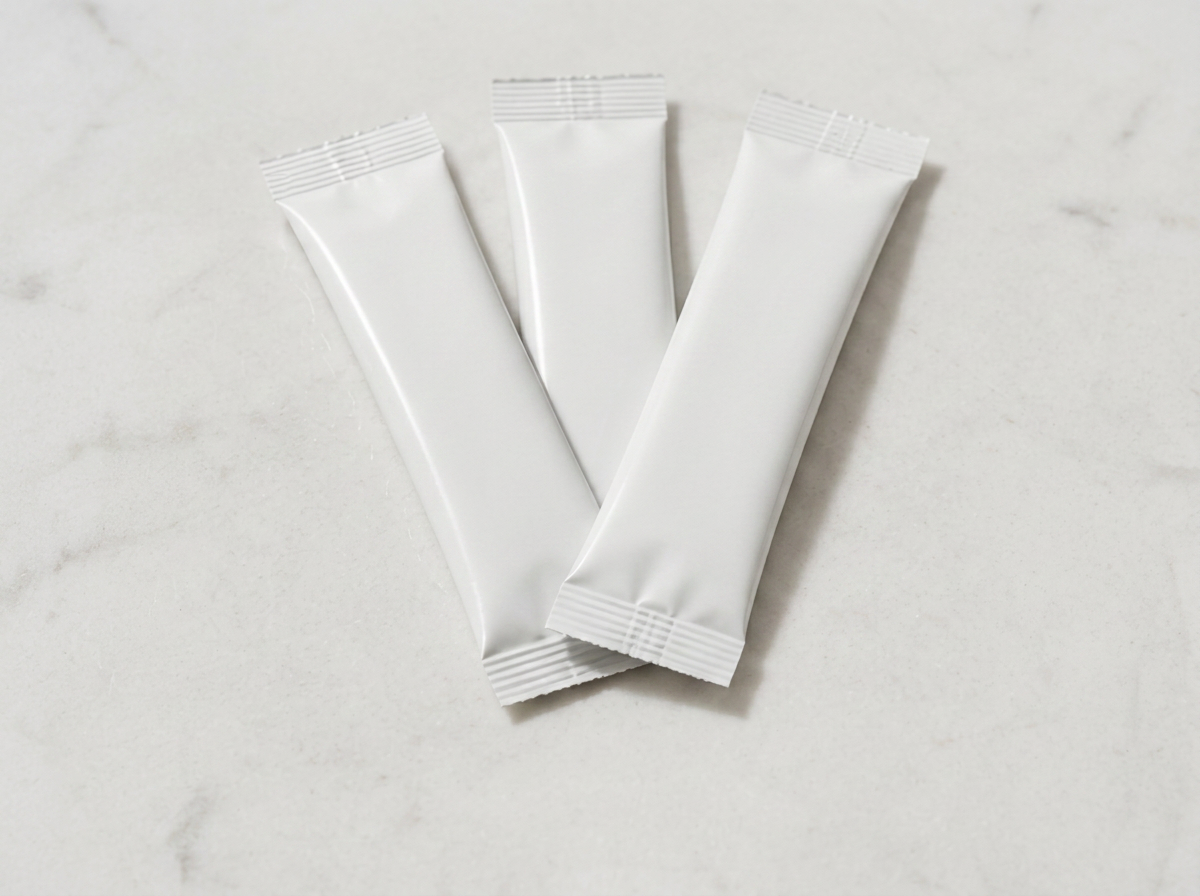
Stick packs put one serving into a slim pouch and are packed into cartons of roughly 10 to 30 sticks. They open up checkout, travel, and gym placements and make trial easy. For more on film structures and fill sizes, see our stick pack packaging guide.
Flavor, Mixability, and Texture
Flavor systems do a lot of work in powders. Minerals, amino acids, botanical extracts, and some vitamins are bitter, salty, or earthy, and a flavor house or in-house team has to balance sweeteners, acids, and masking agents to make a serving people will drink every day. Sweetener choice also affects labeling and positioning: sugar, stevia, monk fruit, sucralose, and sugar alcohols each appeal to different shoppers.
Mixability depends on particle size and processing. Agglomerated or instantized powders disperse faster in water, while fine, untreated powders can float and clump. Gums and fibers can thicken a drink more than shoppers expect. Ask for samples and mix them the way a customer would, in a shaker bottle and in a glass with a spoon, before approving a program.
Fill by Weight, Settling, and Scoop Sizing
Powder supplements are sold by net weight, not by volume, and the label must declare the net quantity. Powders settle during shipping, so a container filled to the brim at the plant often looks partly empty when opened. That is normal, but excessive empty space can raise questions about slack fill under FDA rules, which restrict nonfunctional headspace in packaging. Container size should be matched to the fill so the settled product still fills the package reasonably.
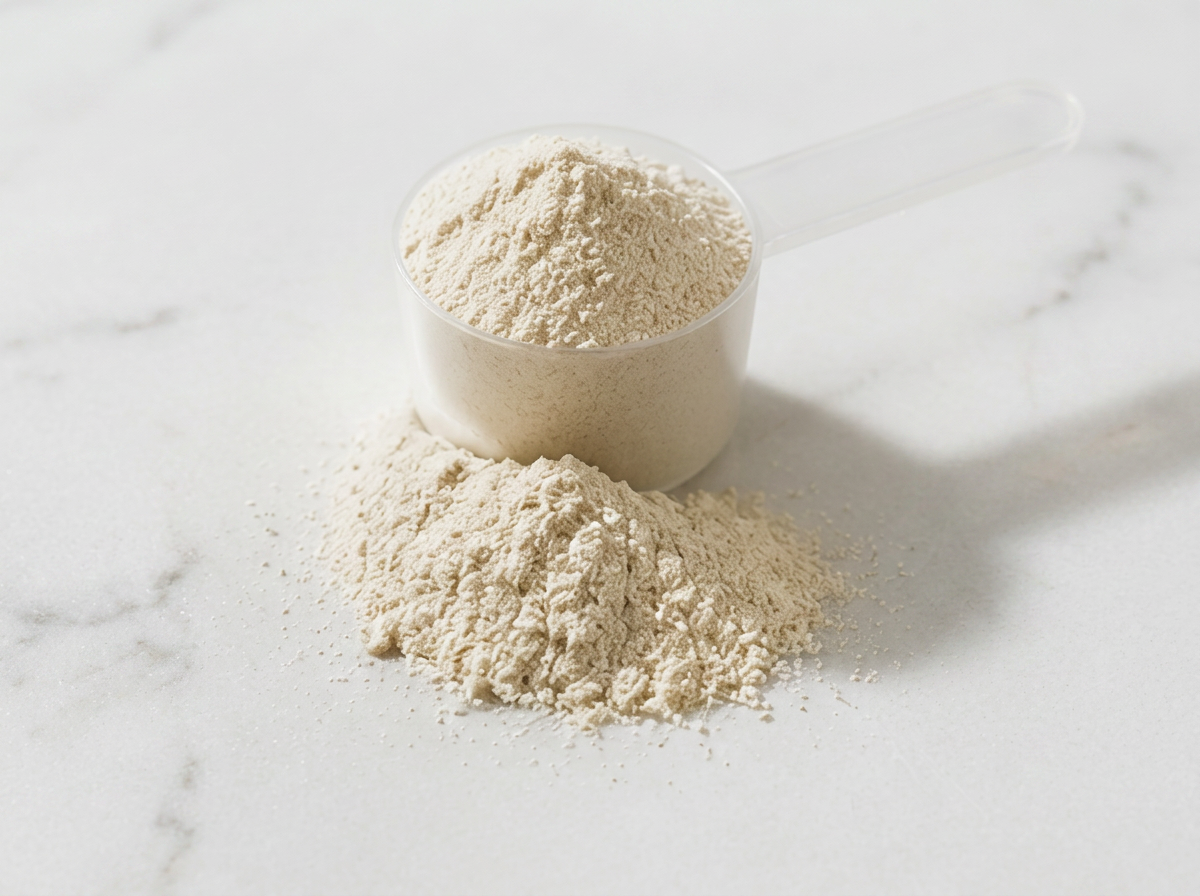
Scoop size should match the serving size on the Supplement Facts panel. Because different blends have different bulk densities, a scoop that holds 10 grams of one powder might hold 7 or 13 grams of another. Buyers should confirm the scoop was sized for that specific product, especially when a brand changes flavors or formulas.
A powder lives or dies on three things: how it mixes, how it tastes, and whether it clumps before the tub is empty.
Bulk Vitamin Powder and Ingredient Quality
Some buyers purchase bulk vitamin powder or unflavored single ingredients, such as vitamin C, creatine, or collagen peptides, in larger bags or pails. These appeal to value-driven shoppers, practitioners, and brands that repackage. Bulk products still need full dietary supplement labeling if sold to consumers, and the same testing standards apply.
Powders deserve close attention on testing. Protein, greens, and botanical powders can carry heavy metals from soil and water, and multi-gram servings mean a small concentration adds up. Ask for lot-specific results that cover heavy metals and microbial limits, along with identity and potency. Brands selling in California should also consider Proposition 65 warning requirements, which apply based on exposure levels for listed substances. Our guide to reading a certificate of analysis explains what to look for.
What to Ask a Supplement Powder Manufacturer
- What is the serving size, scoop size, and number of servings per container?
- Which packaging format and film or container material is used, and does it include a liner or desiccant?
- What flavor and sweetener system is used, and have taste and mixability been tested?
- Does the blend include flow agents or anti-caking agents such as silicon dioxide?
- What testing is performed per lot, including heavy metals and microbial limits?
- What are the storage recommendations and expiration dating for the finished product?
Also ask how the manufacturer controls blend uniformity. In a large tub, the powder at the top and bottom should deliver the same amount of each ingredient per scoop. Ingredients with different particle sizes can separate during shipping, so blending, particle size control, and fill practices all affect consistency.
Building a Powder Assortment
A practical wholesale powder assortment often carries the same core formulas in more than one format: a tub or pouch for regular users and single-serve sticks for trial and portability. Flavor count should match the velocity of the channel, since every added flavor means more SKUs to manage. Unflavored options appeal to shoppers who mix into coffee or smoothies and are often simpler to stock.
RV Pharma carries powders and stick packs among its stock formats, with private-label, packing, and distribution programs for retailers, distributors, and e-commerce sellers. Product is cGMP compliant, NSF/ANSI 455-2 certified, and third-party tested, with lot and expiration coding on every unit and case and lot-specific COAs available on request.
Frequently asked questions
What are the most common powder supplements?
The largest powder categories include protein, collagen, greens and superfood blends, electrolytes, pre-workout, creatine, fiber, and drink-mix vitamins such as vitamin C. These ingredients are usually taken in gram-level servings, which makes powder the most practical format compared to capsules or tablets.
Why does my supplement powder container look half empty?
Powders settle during shipping and handling, so a container filled correctly at the plant can look less full when opened. Powders are sold by net weight, which is declared on the label. Manufacturers should size containers so settled product still fills the package reasonably and avoids excessive slack fill.
Are pouches or tubs better for powder supplements?
Tubs offer strong shelf presence and easy scooping, which suits grocery, pharmacy, and club stores. Pouches are lighter, use less material, and cost less to ship, which suits e-commerce and refill programs. Both need good moisture barriers. Many brands offer both formats to fit different channels.
What testing should wholesale powder supplements have?
Each lot should be tested for identity and potency of key ingredients, microbial limits, and heavy metals, since protein, greens, and botanical powders can carry trace metals and servings are large. Ask the supplier for lot-specific COAs and confirm testing aligns with the product's specifications.
Sourcing a program in this category? A distribution specialist can walk through formats, MOQs, and lead times with you.
Request Wholesale Pricing