Stick Pack Packaging for Supplements: Formats, Fill Sizes, and Retail Fit
Stick packs turn a powder or liquid supplement into a single-serve, grab-and-go product. Here is what buyers should know about films, fill sizes, cartons, costs, and where the format sells best.
Stick pack packaging has moved from a coffee and sweetener format into a mainstream supplement format. Electrolytes, greens, collagen, vitamin C drink mixes, creatine, and liquid shots all show up in slim single-serve sticks. For shoppers, the appeal is simple: one serving, no scoop, easy to toss in a bag. For buyers, the format opens up checkout, travel, gym, and sampling placements that a tub or bottle cannot reach.
This guide covers how stick packs are built, typical fill sizes, how they are packed for retail, and what to weigh before adding them to your assortment or developing your own.
What Stick Pack Packaging Is
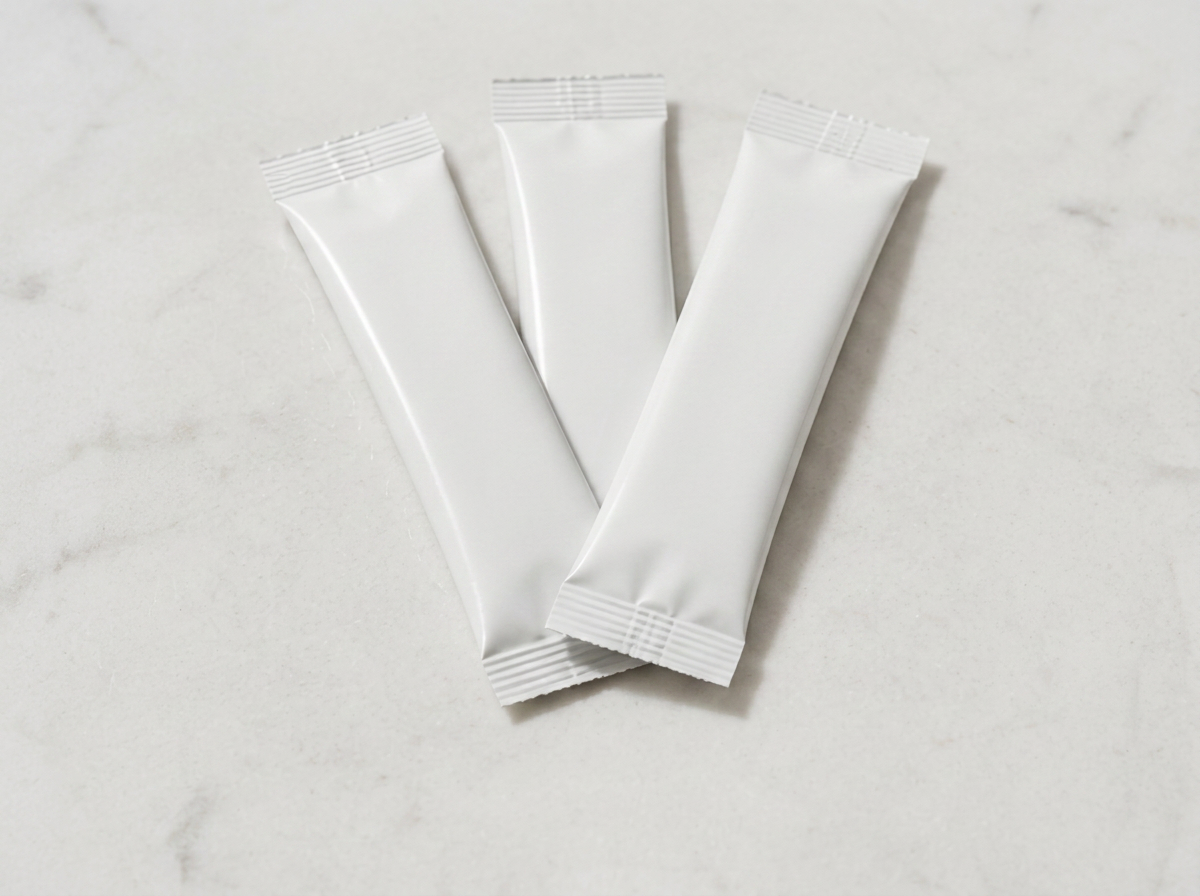
A stick pack is a narrow, tube-shaped pouch formed from a roll of flexible film. The film is wrapped around a forming tube, sealed along its length (the back seal or fin seal), sealed at the bottom, filled with a measured dose, and sealed at the top before being cut. Multi-lane machines produce several sticks side by side at once, which is why stick packaging is efficient at volume.
Compared with a traditional square sachet, stick packs use less film per serving, fit more units per carton, and pour more cleanly into a water bottle thanks to the narrow opening. Most include a tear notch so they open without scissors.
Films and Barrier Protection
The film is a laminate of several layers, each doing a specific job. A common structure pairs an outer printable layer such as PET or paper, a barrier layer such as aluminum foil or metallized film, and an inner sealant layer such as polyethylene.
| Film type | Barrier level | Typical use |
|---|---|---|
| Foil laminate | Highest moisture and oxygen barrier | Hygroscopic powders, probiotics, vitamin blends |
| Metallized film | Good barrier, lower cost than foil | Many drink mixes and less sensitive powders |
| Clear or paper-based film | Lower barrier | Stable ingredients where appearance or sustainability messaging leads |
Supplement powders are often hygroscopic, meaning they pull moisture from the air. Electrolyte salts, sugars, fruit powders, and some vitamins can clump or harden in a weak film. Foil structures cost more but give the most reliable shelf life for sensitive formulas.
Typical Fill Sizes for Stick Packs
Stick packs come in a range of widths and lengths, and the right size depends on the fill weight and the product's density. As a general guide:
- Small sticks for a few grams of powder suit sweeteners, concentrated vitamin powders, and low-dose drink mixes.
- Mid-size sticks in roughly the 5 to 15 gram range cover most electrolyte, greens, and vitamin C mixes.
- Larger sticks for 15 to 30 grams or more are used for collagen, protein, and meal-style mixes.
- Liquid sticks are sized by volume and are commonly used for gels, syrups, and concentrated shots.
Fill accuracy depends on the filler type. Auger fillers are standard for powders, volumetric cup fillers work for free-flowing granules, and piston or pump fillers handle liquids. Fine, sticky, or fluffy powders can be harder to dose precisely at high speed, so blend properties matter just as they do in capsule filling.
Powder vs. Liquid Stick Packs
Powder sticks are the larger category. They are dry, generally stable, and simple to fill, and shoppers mix them into water or a smoothie. Liquid sticks hold gels, syrups, and concentrated shots that are taken straight from the pack, which removes the mixing step entirely. That convenience comes with more technical work: liquids need a preservation strategy, seals must hold against product in the seal area, and fill equipment has to dose cleanly without drips.
Liquid sticks also weigh more per serving and can be more sensitive to freezing and heat in transit. For a closer look at when the format pays off, read our guide to liquid stick packs.
Retail Fit and Channel Strategy
Stick packs rarely sell as loose singles on a regular shelf. They are usually packed into a printed carton, a resealable pouch, or a counter display. Carton counts in the range of 10 to 30 sticks are common, aligning with a week, two weeks, or a month of use. Singles and small multipacks work well at checkout, in convenience stores, and in travel and fitness settings.
| Channel | How stick packs fit |
|---|---|
| Grocery and pharmacy | Cartons in the drink mix, vitamin, or sports nutrition set; checkout singles |
| Convenience and travel | Singles and small packs near registers, grab-and-go impulse buys |
| Gyms and wellness studios | Singles and sampling programs |
| E-commerce | Multi-count cartons, subscription bundles, variety packs |
| Corporate and events | Gift bags, sampling, and branded kits |
Price per serving is typically higher in stick packs than in a bulk tub because each dose has its own film and seal. Shoppers generally accept that premium for convenience, portion control, and portability. A good assortment often carries the same formula in both a tub and a stick carton so shoppers can choose. For a broader view, see our overview of supplement packaging options.
Stick packs sell convenience. Price them and place them where convenience is the reason someone buys.
Custom Stick Packs vs. Stock Programs
Custom stick packs mean your own formula, film printing, and carton design. They give full control over branding and flavor but come with setup costs such as printing plates or digital print setup, film minimums, and formula development. Film is ordered on printed rolls, so minimums are often driven by film runs as much as by the powder.
Stock stick pack programs work well for retailers and online sellers who want to test the format without investing in custom film, or who need a fill-in SKU for a seasonal set. Private label on a stock formula is a middle path, with your brand on the outer carton.
What to Check Before You Buy
- Film structure and barrier level relative to the ingredients.
- Fill weight per stick and how it lines up with the Supplement Facts serving size.
- Seal integrity and tear-notch performance, since leaks and hard-to-open sticks drive complaints.
- Carton count, case pack, and case dimensions for your shelf or fulfillment setup.
- Lot and expiration coding on each stick or on the carton, plus lot-specific test results.
Labeling rules still apply at the single-serve level. The outer carton carries the full label, and individually sold sticks need the required label elements as well, so confirm how the stick will be sold before finalizing print.
RV Pharma carries stick packs as one of its stock formats, alongside powders, liquids, gummies, and other formats, with private-label, packing, and distribution programs available. Product is cGMP compliant, third-party tested, and lot and expiration coded on bottle and case, with quotes itemized against volume tiers.
Frequently asked questions
What is stick pack packaging?
Stick pack packaging is a narrow, single-serve pouch formed from a roll of laminated film, sealed along its length and at both ends. It holds one dose of powder, granules, or liquid. Supplement brands use it for drink mixes, electrolytes, collagen, and liquid shots because it is portable and pours cleanly.
How much powder fits in a stick pack?
It depends on the stick's width, length, and the powder's density. Small sticks hold a few grams, mid-size sticks commonly hold around 5 to 15 grams, and larger sticks can hold 20 to 30 grams or more for collagen or protein mixes. The supplier sizes the stick to the fill.
Are custom stick packs expensive?
Custom stick packs involve printed film, setup costs, and film minimums, so the upfront commitment is higher than stock programs. Per-serving cost is also higher than a bulk tub because every dose has its own film and seal. Volume lowers the per-unit cost considerably.
What film is best for supplement stick packs?
Foil laminates give the strongest barrier against moisture and oxygen and suit hygroscopic powders, probiotics, and vitamin blends. Metallized films are a lower-cost option for less sensitive mixes. Clear or paper-based films offer less protection and fit stable ingredients where appearance or sustainability messaging leads.
Sourcing a program in this category? A distribution specialist can walk through formats, MOQs, and lead times with you.
Request Wholesale Pricing