How Supplement Distribution Companies Work Behind the Scenes
Between the manufacturer and the shelf sits a lot of unglamorous work. Here is what supplement distribution companies do with product from the moment it arrives until it ships.
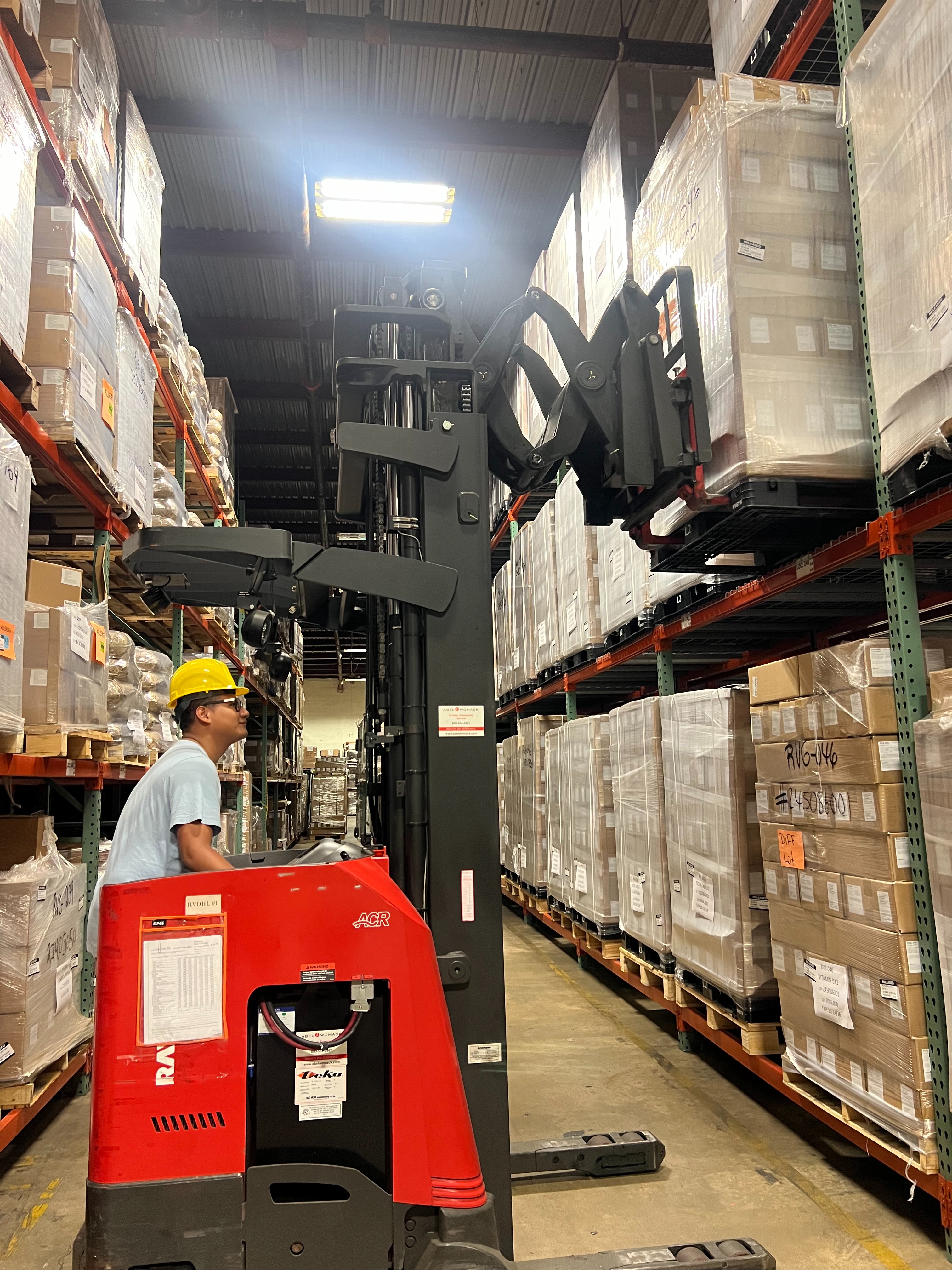
From the outside, supplement distribution companies look simple: buy product, store it, ship it. Inside, the work is closer to a quality-controlled logistics operation. Every pallet that comes in has to be checked and recorded, every lot has to be traceable to where it went, storage conditions have to protect the product, and outbound orders have to meet the requirements of retailers, marketplaces, and online sellers who each want things done differently.
Understanding what happens behind the scenes helps buyers ask better questions and spot the difference between a distributor that just moves boxes and one that protects their business.
The regulatory frame: holding and distributing count
Many people assume cGMP rules apply only to manufacturing. In fact, FDA's dietary supplement cGMP regulation, 21 CFR 111, covers companies that manufacture, package, label, or hold dietary supplements. Its holding and distributing requirements call for storing product under conditions that protect against contamination and deterioration, including appropriate temperature, humidity, and light, and for keeping records that support traceability. A supplement distributor that holds inventory is therefore operating within a regulated framework, not just running a warehouse.
Distributors whose name appears on a label take on further responsibilities, including handling serious adverse event reports under federal law. That is one reason good distributors are careful about documentation from the moment product arrives.
How supplement distribution companies move product, step by step
| Stage | What happens | Why it matters to buyers |
|---|---|---|
| Receiving | Shipments checked against purchase orders; counts, condition, and labels verified | Catches shortages and damage before stock enters inventory |
| Quality review | Lot numbers and expiration dates recorded; COAs matched to lots; suspect product quarantined | Ensures only released, documented product ships |
| Putaway and storage | Product assigned locations in controlled conditions | Protects potency, texture, and appearance |
| Order processing | Orders received by portal, email, or EDI; allocated by lot and expiration | Right product, right dating, right customer |
| Pick, pack, and label | Units or cases picked, packed, and labeled to customer requirements | Avoids chargebacks and marketplace rejections |
| Shipping | Parcel, LTL, or truckload selected and booked | Balances cost, speed, and product protection |
| Returns and complaints | Returned goods inspected, recorded, and quarantined or destroyed | Keeps compromised product out of circulation |
Receiving and quality checks
Receiving is the most important control point in the building. When a shipment arrives, staff compare it against the purchase order and packing list, count cases, look for damage, and confirm that labels match the expected product. Lot numbers and expiration dates are captured for every SKU. Certificates of analysis are matched to those lots so the distributor can answer a customer's documentation request later without guessing.
Anything that looks wrong goes into quarantine: a crushed case, a lot without a matching COA, a label that does not match the product specification. Quarantined stock is physically or systematically separated so it cannot be picked until it is reviewed and released.
Much of this work starts before the truck arrives. Distributors qualify their sources by confirming cGMP compliance, facility registration, and testing practices, and they set expectations for how product must be labeled, coded, and packed. When suppliers know that every inbound lot will be checked against a COA and a specification, fewer problems reach the dock in the first place. For buyers, a distributor's supplier qualification process is worth asking about, because it determines what kind of product ever makes it into inventory.
Storage and inventory control
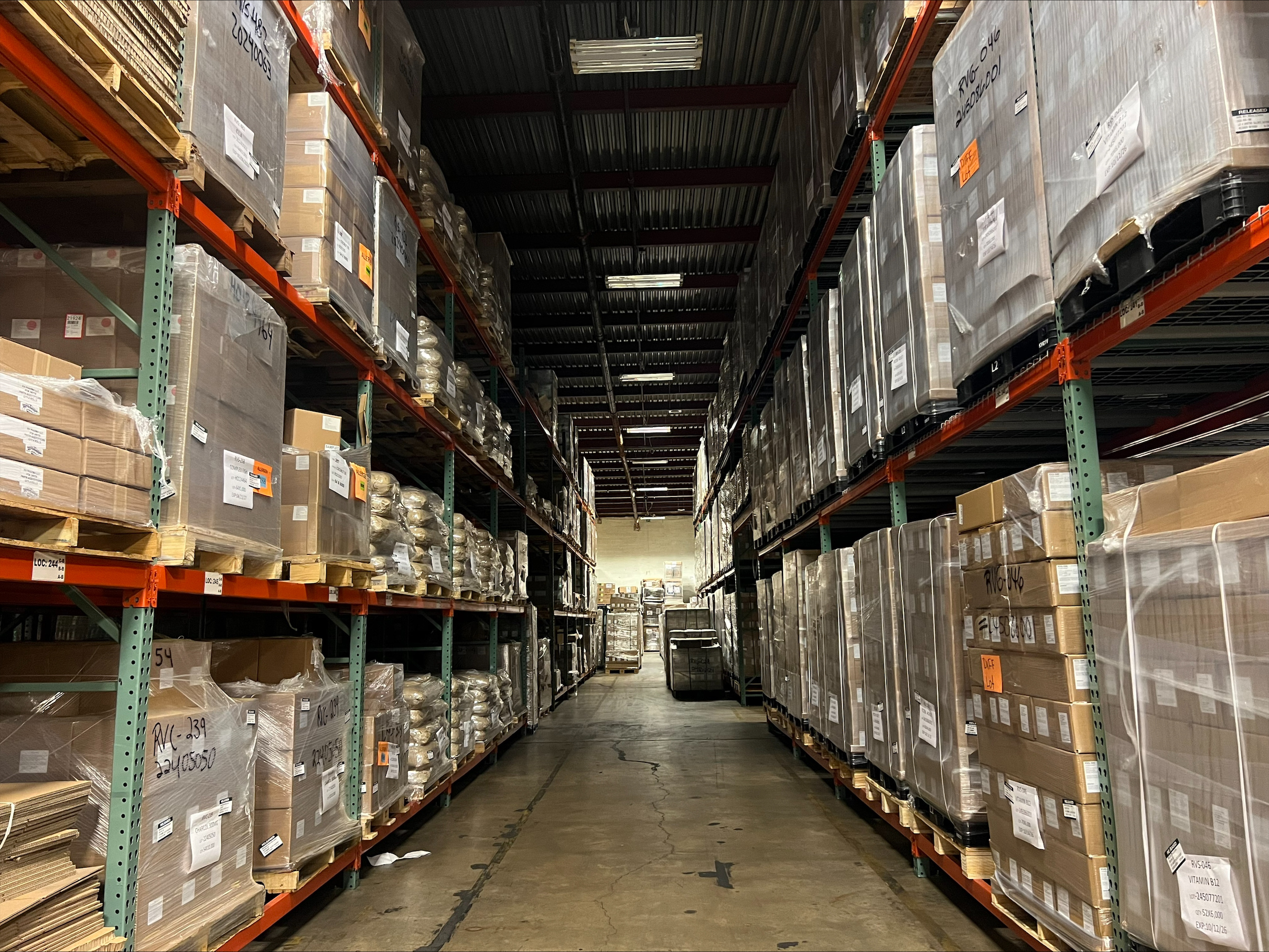
Once released, product is put away into assigned locations and tracked in a warehouse management system. Good distributors monitor temperature and humidity, keep heat-sensitive formats such as gummies, softgels, and soft chews in the most stable areas, and keep stock off the floor and away from exterior walls and direct light.
Rotation is usually first-expired, first-out (FEFO), so the lot with the earliest expiration date ships first. Systems flag lots approaching a customer's minimum dating so they can be sold through, discounted, or pulled before they become a problem. Cycle counts catch discrepancies between the system and the shelf. Our guide to supplement inventory management covers these practices from the buyer's side.
A distributor's real product is not the bottle. It is confidence that the right lot reached the right customer in the right condition.
Order processing, packing, and shipping
Orders arrive in different ways. Smaller buyers email or submit orders through a portal. Larger retailers usually send electronic data interchange (EDI) transactions: purchase orders, advance ship notices, and invoices in standardized formats. The distributor allocates inventory by lot and expiration, often honoring customer-specific dating minimums, then releases the order to the floor.
Packing depends on the customer. An e-commerce seller may need cases palletized for a marketplace warehouse with specific prep and labeling. A retail chain may require case labels, pallet heights, and delivery appointments laid out in its routing guide. A pharmacy may want mixed cases. Every shipment records which lots went to which customer, which is the foundation of traceability.
For freight, small orders go by parcel, mid-sized orders by less-than-truckload (LTL), and large orders by full truckload. In hot months, distributors that handle gummies and softgels plan routes, transit times, and packaging to limit heat exposure. See our shipping information for how stock orders move.
Traceability, returns, and recalls
- Lot records link every lot received to every customer it shipped to, so an issue can be traced in both directions.
- Complaints are logged with lot information and reviewed for patterns.
- Returned product is inspected and generally not returned to saleable stock unless its quality can be confirmed.
- A written recall procedure defines who is notified, how affected lots are located, and how product is retrieved and documented.
When traceability works, a problem with one lot stays a problem with one lot. When it does not, a business may have to pull far more product than necessary. That is why lot and expiration coding on both the unit and the case matters so much: it lets everyone in the chain identify affected product without opening every carton.
Services beyond distribution
Many distributors also offer value-added programs. These can include private label on stock formulas, packing and repacking into different counts or formats, kitting, and coordination of custom formula quotes with manufacturing partners. A food supplement distributor serving both retail and e-commerce customers may run several of these programs side by side, all within the same quality and traceability system.
RV Pharma is a U.S. wholesale distributor supplying retailers, distributors, pharmacies, and e-commerce businesses across North America with stock supplements in ten formats, plus private-label, packing, and distribution programs. Every lot ships with lot and expiration coding on bottle and case, and lot-specific COAs are available on request.
Frequently asked questions
What do supplement distribution companies do?
They buy or hold finished supplements, receive and inspect shipments, record lot and expiration information, store product under controlled conditions, and fill orders for retailers, pharmacies, and online sellers. Many also handle EDI, retailer compliance, freight, returns, recalls, and value-added services such as private label and packing.
Do cGMP rules apply to supplement distributors?
Yes, to the extent they hold dietary supplements. FDA's cGMP regulation, 21 CFR 111, covers companies that manufacture, package, label, or hold supplements. Its holding and distributing requirements address storage conditions that protect product quality and records that support traceability, so warehousing supplements is a regulated activity.
How does a supplement distributor track lot numbers?
At receiving, lot numbers and expiration dates are captured for every SKU and linked to the matching COA. Inventory is stored and allocated by lot, and each outbound shipment records which lots went to which customer. That record lets the distributor trace any lot forward to customers or back to its source.
What is the difference between a supplement distributor and a 3PL?
A third-party logistics provider stores and ships goods it does not own, following the client's instructions. A supplement distributor typically buys and resells product, manages its own inventory and pricing, and supports customers with documentation and account service. Some companies offer both models.
Sourcing a program in this category? A distribution specialist can walk through formats, MOQs, and lead times with you.
Request Wholesale Pricing