
Supplement Storage and Warehouse Temperature: A Buyer's Guide
"Store in a cool, dry place" is not a warehouse spec. Here is what supplement storage temperature really means, which formats are most sensitive, and how to monitor your space.
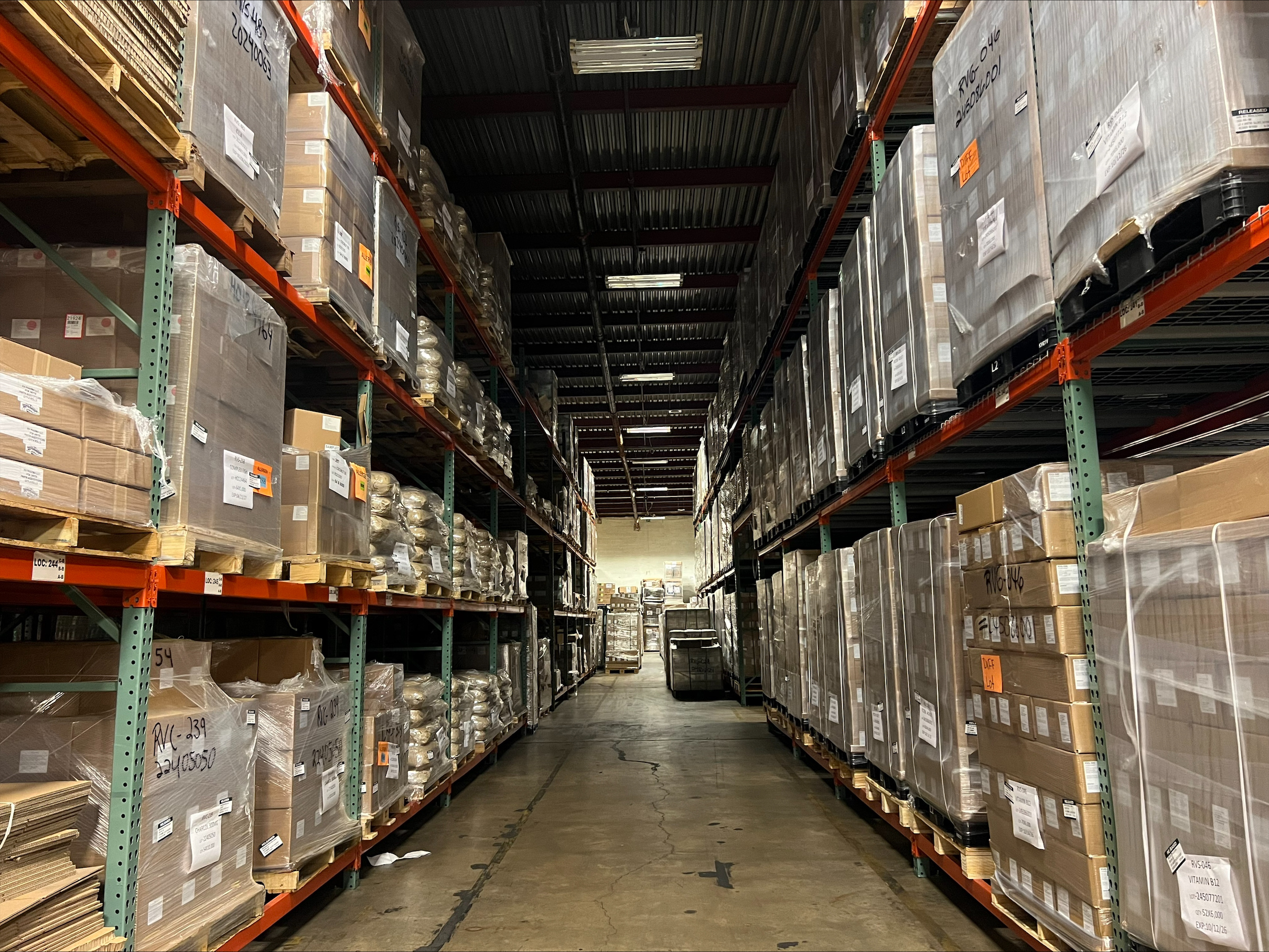
Supplement storage temperature is one of those details that rarely comes up until something goes wrong. A pallet of gummies sits against a sunny dock door for a week. A back room above a pharmacy runs hot all summer. Softgels come back from a store stuck together. The label says "store in a cool, dry place," but nobody defined what that means for your warehouse or your stockroom.
This guide translates label language into practical storage targets, explains which formats are most sensitive, and outlines how distributors and retailers can monitor conditions without building a pharmaceutical cold chain.
What "cool, dry place" means in practice
Most shelf-stable supplements are designed to be stored at what the pharmaceutical world calls controlled room temperature. The United States Pharmacopeia defines that as 20 to 25°C (68 to 77°F), with brief excursions allowed between 15 and 30°C (59 to 86°F). Supplements are not drugs and are not bound by that definition, but it is a sensible reference point, and many manufacturers design stability programs around similar conditions.
"Dry" is harder to pin down. As a general practice, storage areas that stay well below high humidity levels (many operators aim for roughly 60 percent relative humidity or lower) reduce clumping, softening, and sticking. The exact target should follow the product's labeling and any storage guidance from the manufacturer.
| Label wording | Practical interpretation |
|---|---|
| Store at room temperature | Roughly 68–77°F, avoid sustained heat above the mid-80s °F |
| Store in a cool, dry place | Room temperature or below, away from heat sources and humidity |
| Keep refrigerated | Typically 36–46°F (2–8°C); requires cold chain |
| Refrigerate after opening | Shelf stable until opened; storage changes once the consumer opens it |
| Avoid excessive heat | Do not store near dock doors, skylights, or heaters |
Supplement storage temperature by format
Not all formats react to heat and humidity the same way. When planning warehouse storage for supplements, group SKUs by sensitivity.
- Gummies: the most heat-sensitive common format. Gelatin gummies can soften and fuse as temperatures climb toward body temperature, and pectin gummies can sweat or stick. Keep them in the coolest part of the building.
- Softgels: gelatin shells can soften and stick together in heat and become brittle if conditions are very dry. Oils inside are prone to oxidation over time, and heat speeds that up.
- Soft chews, lozenges, and lollipops: sugar-based formats that can soften, deform, or become tacky in warm, humid conditions.
- Capsules and tablets: generally the most forgiving, though humidity can soften tablets and make capsules tacky.
- Powders and stick packs: heat is less of an issue than moisture. Humidity causes clumping, especially in opened tubs.
- Probiotics: some are shelf stable because of strain selection and packaging; others require refrigeration. Follow the label exactly.
- Liquids: some need refrigeration after opening; most are shelf stable sealed. Freezing can damage some liquid products and packaging.
Heat damage is usually cumulative, so a few degrees every day can matter more than one hot afternoon.
Cold matters less for most formats, but it is not irrelevant. Product that freezes in an unheated trailer or warehouse in winter can see condensation form inside the bottle once it warms up, which puts moisture right where you do not want it. Let cold pallets come up to room temperature before opening cases, and avoid storing liquids anywhere they could freeze. Seasonal swings in both directions are a good reason to keep monitoring year-round rather than only in summer.
How to store supplements in a warehouse
Good supplement storage does not require a specialized facility, but it does need discipline. The following practices cover most distribution and retail back-of-house situations.
- Map the space. Temperature varies by location. Areas near dock doors, under roofs, near skylights, and on upper rack levels run hotter. Place data loggers in several locations for a full season before deciding where sensitive SKUs go.
- Assign zones. Put gummies, softgels, and soft chews in the most stable area. Capsules, tablets, and sealed powders can go in less ideal spots.
- Keep product off the floor and away from walls. Pallets on racking or on pallets, not directly on concrete, with airflow around them.
- Monitor continuously. Use data loggers or a building monitoring system with alerts, not a thermometer someone checks occasionally.
- Control receiving. Do not let inbound pallets sit on a hot dock or in a trailer. Put sensitive product away first.
- Document excursions. If temperature goes out of range, record how long and how far, which lots were affected, and what you did about it.
- Rotate by expiration. Older lots should ship first so product does not sit through multiple summers.
These steps also help when a customer complaint comes in. If you can show that a lot was stored within range from receipt to shipment, you have narrowed where a problem could have occurred. Our inventory management guide covers FEFO rotation in more detail.
Refrigerated and temperature-controlled items
A small number of supplements, mainly certain probiotics and some liquids, require refrigeration throughout distribution. These need a separate cold chain: refrigerated storage, insulated shipping with cold packs or refrigerated transport, and clear receiving instructions for the customer. If you do not have that capability, it is usually better to carry shelf-stable alternatives than to ship refrigerated product through a room-temperature network.
Retail stockrooms and store shelves
Retailers are the last link and often the weakest. Stockrooms above kitchens, in basements with poor ventilation, or next to compressors can be much warmer or more humid than the sales floor. Front windows and endcaps under strong lighting also get warm. Buyers can reduce risk by asking stores to hold gummies and softgels away from these spots and by ordering in quantities that turn before summer.
Transit counts as storage too
Trailers, parcel vans, and delivery lockers can run far hotter than any warehouse. A product can be stored perfectly for months and still arrive damaged after two days in a hot truck. For heat-sensitive formats, plan shipping around the calendar. We cover this in detail in shipping gummies in hot weather, and our shipping page explains how RV Pharma handles stock orders.
RV Pharma is a cGMP-compliant, FDA-registered wholesale distributor, and every lot ships with lot and expiration coding on bottle and case so storage history can be tied to a specific lot. If you have questions about storing a particular format, our team is happy to help.
Frequently asked questions
What temperature should supplements be stored at?
Most shelf-stable supplements do best at normal room temperature, roughly 68 to 77°F (20 to 25°C), away from heat sources and humidity. Brief excursions a bit above or below are usually fine. Products labeled "keep refrigerated" need 36 to 46°F. Always follow the specific storage instructions on the product label.
Can supplements be stored in a hot warehouse?
Sustained heat shortens shelf life and can physically damage some formats. Gummies, softgels, and soft chews are most at risk of softening, sticking, or deforming. Capsules and tablets are more forgiving but can still degrade over time. Warehouses should monitor temperature and place sensitive products in the coolest zones.
How does humidity affect supplement storage?
Humidity causes powders to clump, tablets to soften, and gummies or capsules to become sticky. It can also speed up degradation of moisture-sensitive ingredients like probiotics. Keeping storage areas dry, keeping containers sealed, and using appropriate desiccants all help protect product through its shelf life.
Sourcing a program in this category? A distribution specialist can walk through formats, MOQs, and lead times with you.
Request Wholesale Pricing