Buying Bulk Vitamins: Case Packs, Dating, and Storage
Buying in bulk lowers unit cost, but only if the stock sells before it expires and survives storage. Here is how experienced buyers handle case packs, dating, and warehousing.
Buying bulk vitamins is one of the simplest ways to lower unit cost, and one of the easiest ways to lose money if it is done carelessly. When you buy supplements in bulk, you take on three responsibilities the supplier used to carry: making sure the stock sells before it expires, storing it so it stays in spec, and keeping lot records so you can trace every unit. Get those right and bulk buying works in your favor.
This guide is written for retailers, e-commerce sellers, and brands buying finished, packaged product by the case or pallet. It covers how case packs work, what dating to require, how to store stock, and how to size orders.
What buying bulk vitamins actually means
The term gets used in two ways. Some buyers mean finished bottles purchased in case or pallet quantities for resale. Others mean loose product, such as unbottled capsules, tablets, or gummies, shipped in large lined containers for someone else to package. This article focuses on the first, which is what most retailers and online sellers mean when they look for vitamins in bulk. Loose bulk product is a manufacturing input and comes with its own handling, testing, and repackaging obligations under cGMP.
Understanding case packs and pallets
Finished supplements ship in master cases, and each case holds a fixed number of units, known as the case pack. Suppliers set case packs based on bottle size, weight, and how customers typically receive goods. Common configurations are multiples of 6 or 12, but the exact count varies by product and supplier.
| Unit of measure | What it is | Why it matters |
|---|---|---|
| Each (unit) | A single bottle, pouch, or box | What the end customer buys; carries its own UPC |
| Inner pack | A shrink-wrapped or boxed group inside a case | Lets smaller stores receive less than a full case |
| Master case | The shipping carton holding a set number of units | Usually the minimum orderable quantity; carries a case-level barcode and lot coding |
| Pallet | Cases stacked and wrapped on a pallet in a set pattern | Drives freight cost; retailers may specify height and pattern |
Order in full cases wherever you can. Broken cases cost more to pick and are more likely to arrive damaged. If you sell into retail, make sure the case pack matches how your retailer wants to receive product, and check whether they require specific case labels or pallet configurations. Our guide to case packs and pallet configurations goes deeper on this.
Dating: how much shelf life to require
Every supplement has a limited shelf life, and the clock starts at manufacture, not when you receive it. The number that matters for a buyer is remaining shelf life at the time of shipment. A product with a two-year shelf life that has already spent a year in a warehouse gives you half the selling window you might expect.
- Ask suppliers how much shelf life remains on the specific lot you are buying, not just the product's total shelf life.
- Set a minimum remaining-shelf-life requirement on your purchase orders, based on how quickly you sell.
- Know your downstream rules: retailers and marketplaces often reject or remove product that gets too close to its expiration date.
- Check that lot and expiration codes are printed on both the unit and the case, so you can receive, rotate, and trace without opening every carton.
Remember that format matters. Gummies and liquids generally have shorter practical shelf lives than tablets or capsules, and probiotics and some vitamins are more sensitive to heat and moisture. Our supplement shelf life guide covers the differences in more detail.
The best bulk price in the world is a loss if the stock expires on your shelf.
Storing bulk vitamins and supplements
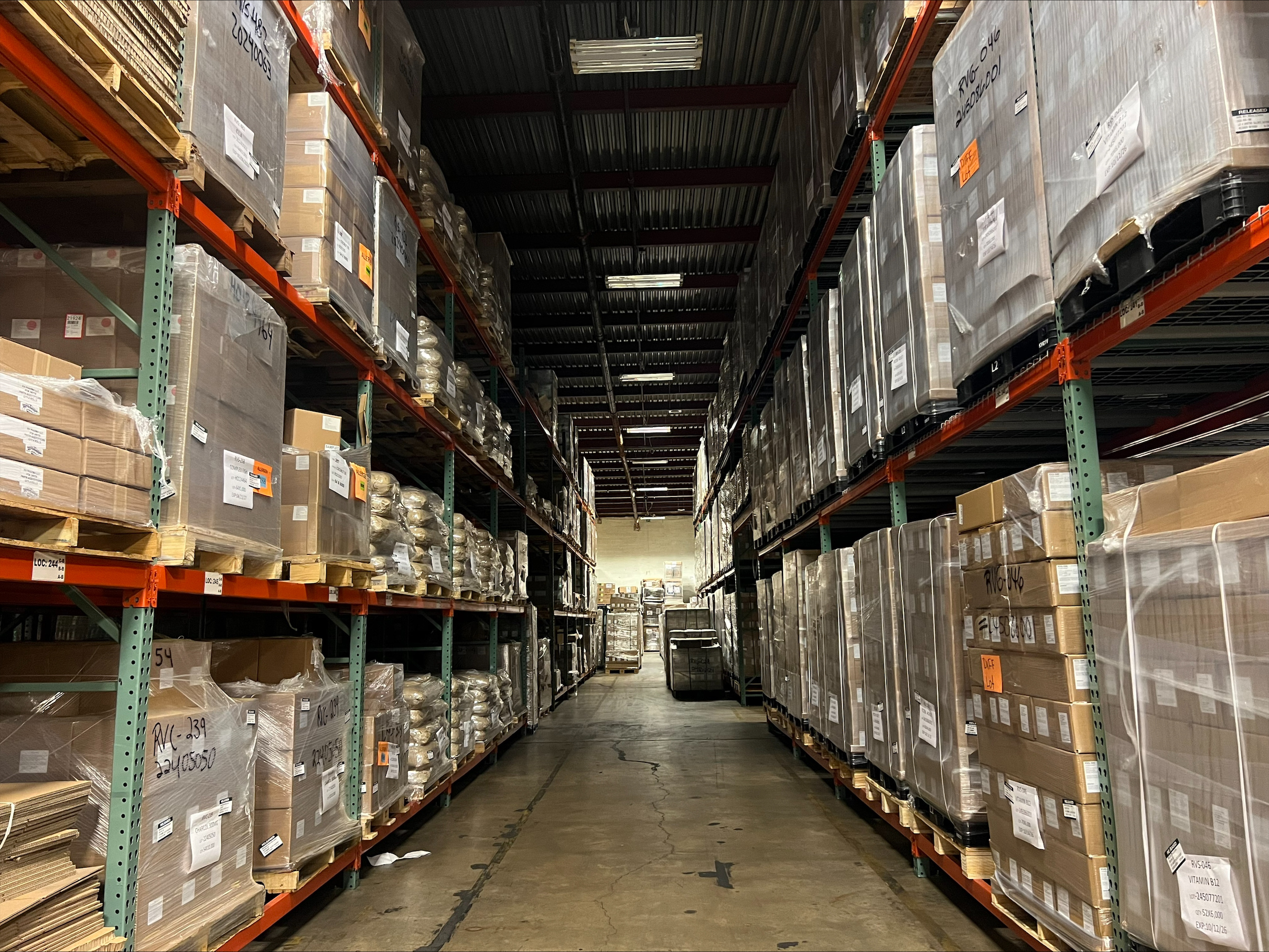
Storage is where bulk buying succeeds or fails. Most finished supplements are labeled for storage in a cool, dry place, and many manufacturers design their stability programs around controlled room temperature, which USP defines as 20 to 25°C (68 to 77°F) with limited excursions. Humidity, heat spikes, and direct sunlight are the main threats.
- Keep stock off the floor on pallets or shelving, away from exterior walls, windows, and heat sources.
- Monitor temperature and humidity, especially in summer and in buildings without climate control.
- Store heat-sensitive formats like gummies, softgels, and soft chews in the most stable part of the building.
- Keep cases sealed until you need them; opened cases let in humidity and light.
- Rotate first-expired, first-out (FEFO), so the lots with the earliest dates ship first.
- Separate damaged, returned, or quarantined product so it cannot be picked by mistake.
Transit counts as storage too. A truck trailer in July can get far hotter than any warehouse. If you receive gummies or softgels during hot months, inspect them on arrival for sticking, deformation, or bloom and document any issues right away.
How to size a bulk order
Start from demand, not price tiers. Estimate how many units you sell per week or month, then decide how many weeks of cover you want to hold. Compare that number against the product's remaining shelf life and your downstream dating rules. The right order is the one that sells through comfortably before any customer or retailer would reject it.
Then look at price breaks. If the next volume tier is only slightly above your calculated quantity and the dating supports it, moving up may make sense. If reaching the next tier means holding stock for many more months, the savings rarely justify the risk. For recurring items, smaller and more frequent orders often beat one large order, especially when the supplier offers fast turnaround on stock items.
Seasonality should shape bulk orders as well. Immune support products tend to peak in fall and winter, while other categories such as hydration and sports nutrition often move faster in warmer months. Buying heavily just before a category's peak can make sense, but plan for the tail end of the season, when demand drops and unsold stock keeps aging. Staggering deliveries across the season, instead of taking everything at once, reduces that risk and keeps fresher dating on your shelf.
Records and traceability
When you buy supplements in bulk and resell them, you become part of the traceability chain. Record lot numbers and expiration dates at receiving, keep the supplier's certificates of analysis organized by lot, and track which lots went to which customers or channels. If there is ever a complaint or a recall, those records let you act on the affected lot quickly instead of pulling everything. The lot numbers and traceability guide covers how to set this up.
RV Pharma supplies finished supplements by the case and pallet across gummies, capsules, softgels, tablets, powders, and more. Every lot ships with lot and expiration coding on bottle and case, lot-specific COAs are available on request, and stock orders ship in an estimated 3 to 10 days.
Frequently asked questions
Is it cheaper to buy vitamins in bulk?
Usually the unit price drops as volume increases, because setup, handling, and freight are spread across more units. The real savings depend on selling the stock before it expires and storing it properly. Buying far beyond your sell-through rate can erase the discount through write-offs and storage costs.
How should bulk vitamins be stored?
Keep sealed cases in a cool, dry area away from sunlight, heat sources, and exterior walls, off the floor on pallets or shelving. Many products are designed around controlled room temperature of 20 to 25°C. Monitor humidity, rotate stock first-expired, first-out, and protect heat-sensitive gummies and softgels.
How much shelf life should wholesale supplements have when they arrive?
There is no single standard, but buyers should ask for remaining shelf life on the specific lot and set a minimum on purchase orders. Base it on how fast you sell and on your retailer or marketplace dating rules, which often reject or remove product nearing expiration.
What is a case pack for supplements?
A case pack is the fixed number of units in one master shipping carton, such as 12 or 24 bottles, though counts vary by product and supplier. It is usually the smallest quantity you can order, carries its own barcode and lot coding, and affects how retailers receive product.
Sourcing a program in this category? A distribution specialist can walk through formats, MOQs, and lead times with you.
Request Wholesale Pricing