
Case Packs and Pallet Configurations for Wholesale Supplement Orders
Case pack and pallet decisions quietly drive freight cost, damage rates, and retailer chargebacks. A buyer's guide to case counts, Ti-Hi, labeling, and building pallets that arrive intact.
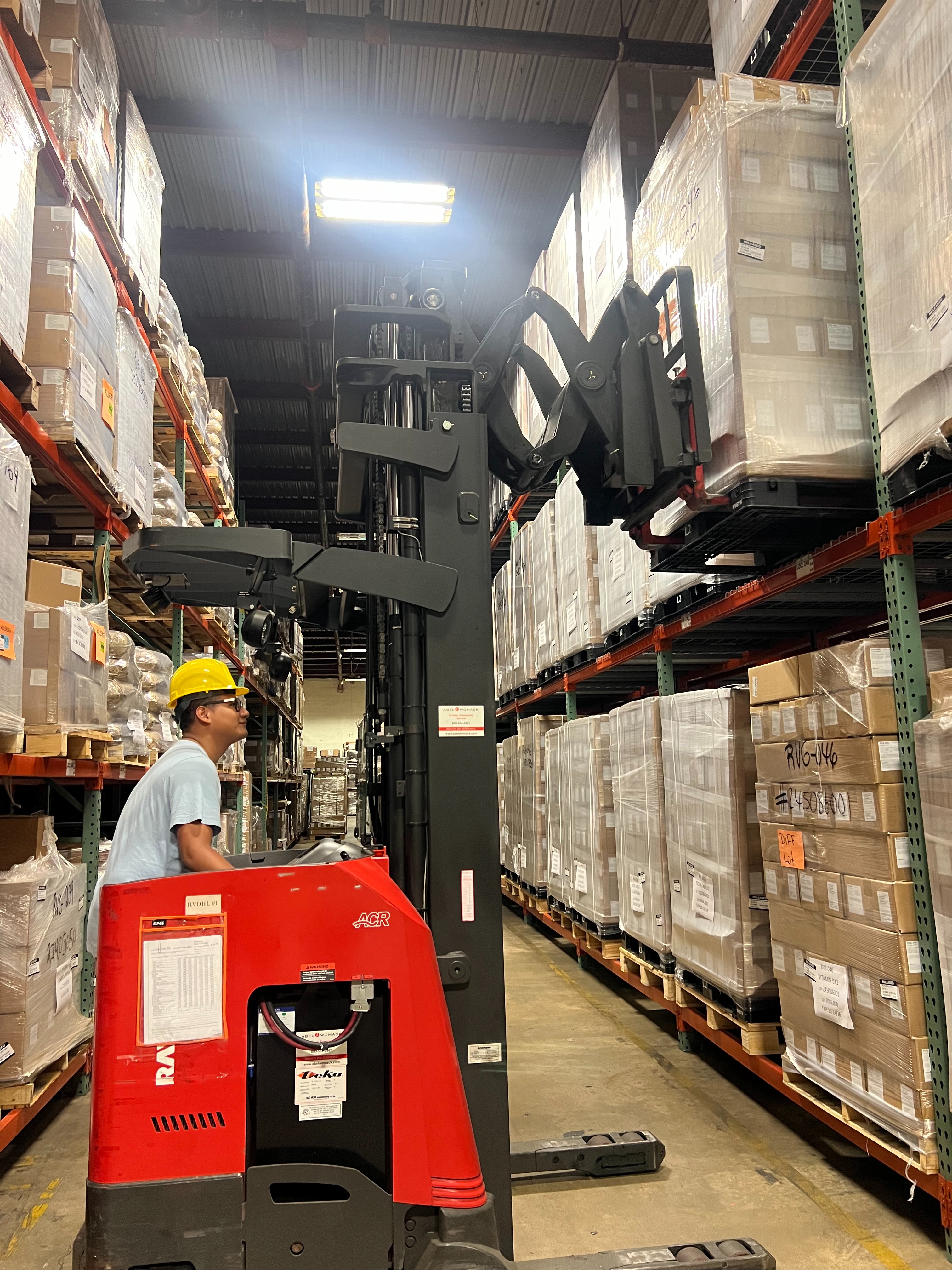
A case pack is the number of sellable units packed into one shipping carton, and it shapes more of a wholesale order than most buyers realize. It sets the minimum you can order in practice, how stores receive and shelve product, how much freight you pay per unit, and how well bottles survive the trip. Pallet configuration adds another layer: how those cases stack, how high, how heavy, and whether the load meets the receiving requirements of a retailer's distribution center.
This guide covers how to think about case counts, how pallets are built and described, what labeling belongs on cases and pallets, and the common problems that cause damage or chargebacks.
Choosing a case pack
For supplements, case packs are usually built around bottles or boxes of a single SKU. Counts such as 12, 24, 48, or 72 units per case are common, but the right number depends on the bottle size, the channel, and how fast the product sells.
- Store-level turns: a pharmacy or independent store that sells a few units a week does not want a 72-count case. Smaller case packs, or inner packs within a larger master case, keep store inventory reasonable.
- Distribution center efficiency: larger cases mean fewer touches per unit in a DC or 3PL and lower handling cost.
- Freight: well-filled cases reduce empty space and dimensional weight charges.
- Weight and ergonomics: very heavy cases are harder to handle and more likely to be dropped. Many warehouses prefer cases that one person can lift comfortably.
- Retailer requirements: some buyers specify the case pack in their item setup. Changing it later can require a new item setup or case code.
For wholesale case pack supplements, a master case with inner packs is a flexible option. A 48-count master case might contain four inner packs of 12. The DC ships full master cases, and stores can break down inner packs without handling loose bottles.
Case construction and labeling
The carton itself matters. Corrugated boxes are rated for strength, commonly by edge crush test (ECT). A heavier product or a taller pallet stack needs stronger board. Dividers or partitions help protect glass bottles and reduce scuffing on clear PET. Cases should be filled snugly so bottles cannot shift, but not so tightly that the case bulges and loses stacking strength.
Case labeling typically includes:
- Product name and SKU
- Case count (units per case)
- Lot number and expiration date
- Case barcode, often a GTIN-14 in ITF-14 or GS1-128 format, distinct from the unit UPC
- Handling marks, such as orientation arrows or "protect from heat" for gummies
Lot and expiration information on the case is especially important for supplements. It lets receiving staff record lots without opening cases, supports FEFO rotation, and makes it possible to find specific lots quickly during a recall. Our lot numbers and traceability guide explains why.
Pallet configuration basics
Pallet configuration describes how cases are arranged on a pallet. The most common pallet in North American retail is 48 by 40 inches. Configuration is usually expressed as Ti-Hi:
- Ti: the number of cases per layer (tier).
- Hi: the number of layers stacked high.
- Total cases per pallet: Ti multiplied by Hi. For example, a Ti-Hi of 10 × 6 is 60 cases.
| Element | Why it matters |
|---|---|
| Pallet footprint | Cases should fit within the edges; overhang weakens cases and causes damage |
| Stacking pattern | Column stacking maximizes compression strength; interlocking improves stability |
| Height | Retailers and carriers often cap total pallet height, including the pallet |
| Weight | Heavy pallets may exceed receiving equipment or retailer limits |
| Wrap and protection | Stretch wrap, corner boards, and top caps keep the load together |
| Pallet label | Often a GS1-128 label with an SSCC for advance ship notices |
A pallet that overhangs by an inch can crush the bottom layer long before it reaches the dock.
Column vs. interlock stacking
Column stacking places each case directly on top of the one below, so corners line up and carry the load. It gives the best compression strength and is usually preferred for heavy or tall loads. Interlocking alternates the pattern layer by layer, which ties the load together and resists shifting, but it reduces compression strength because corners do not align. Many shippers use column stacking with good stretch wrap and corner boards to get both strength and stability.
Retailer requirements and routing guides
Large retailers publish routing guides and vendor manuals that spell out case and pallet requirements: maximum pallet height and weight, pallet type and grade, label placement, whether mixed-SKU pallets are allowed, and how to build advance ship notices. Non-compliance can lead to chargebacks or refused deliveries. Read the guide for each account before your first shipment, and build a standard pallet configuration for each SKU that meets your strictest customer. See our retail compliance and routing guides article for more.
Freight cost and density
LTL freight pricing depends heavily on density, dimensions, and classification. A pallet full of lightweight bottles can be charged more like a larger, heavier shipment if it takes up a lot of space. Tight case packs, full layers, and pallets built close to the maximum allowed height usually lower the cost per unit. Mixed pallets from partial layers are sometimes unavoidable, but consolidating orders to full layers or full pallets where possible saves money.
Before placing a first order, ask your supplier for a case and pallet spec for each SKU: units per case, case dimensions and weight, Ti-Hi, total pallet height and weight, and the case barcode. Having those numbers up front lets you set up items with retail accounts correctly, quote freight accurately, and plan warehouse slotting before the truck arrives instead of after.
Common problems to avoid
- Overhang past the pallet edge.
- Heavy cases stacked on top of lighter ones.
- Loose or under-tensioned stretch wrap.
- Missing lot and expiration information on cases.
- Case barcodes that do not match the retailer's item setup.
- Mixed SKUs on a pallet without clear labeling when the account requires single-SKU pallets.
RV Pharma ships stock orders with lot and expiration coding on every bottle and case, and quotes are itemized against volume tiers so you can see how case and pallet quantities affect pricing. Visit our shipping page for details on how orders are packed and shipped.
Frequently asked questions
What is a case pack?
A case pack is the number of individual sellable units packed into one shipping carton. For supplements, common case packs include 12, 24, 48, or 72 bottles, depending on bottle size and channel. Some suppliers use a master case that contains smaller inner packs, which lets stores receive manageable quantities while DCs handle larger cartons.
What does Ti-Hi mean on a pallet?
Ti-Hi describes a pallet configuration. Ti is the number of cases per layer, and Hi is the number of layers stacked. Multiply them to get total cases per pallet. For example, 8 cases per layer stacked 5 high is a Ti-Hi of 8 × 5, or 40 cases.
What is the standard pallet size for retail shipments?
In North America, the most common pallet size for retail and grocery distribution is 48 by 40 inches. Retailers often set additional rules for pallet grade, maximum height, and maximum weight in their routing guides, so check each account's requirements before building loads.
Sourcing a program in this category? A distribution specialist can walk through formats, MOQs, and lead times with you.
Request Wholesale Pricing